James D. Watson Quotes
Science has always been my preoccupation and when you think a breakthrough is possible, it is terribly exciting.
Watson, James D. Interview. Academy of Achievement, 1998.


Scientific breakthroughs depend on genius, circumstances, the work of others and serendipity. None of these are very predictable which is why it is do difficult to manage a scientific enterprise and be accountable for any results. See {624867}.

Sir Humphry was a religious man, and yet he focused on one of the great differences between science and religion. The latter is presumed true and eternal by its faithful, while science is never such. No truth is eternal in science and rarely does a scientific “truth” last 100 years without modification, elaboration or additional complexity. This is one of the reasons that scientists make poor witnesses at Congressional hearings. They are never certain of anything if they are good scientists. Witnesses from other fields testify with much more certainty as they are motivated by self interest or ideology where doubt is unacceptable.


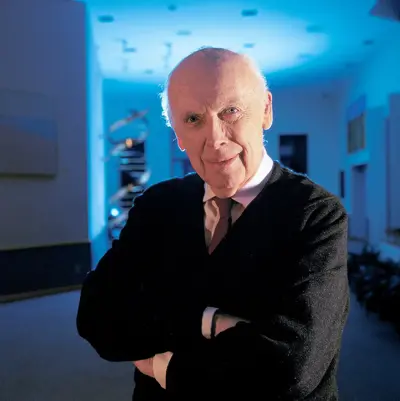
James Dewey Watson KBE is an American molecular biologist, geneticist and zoologist. In 1953, he co-authored with Francis Crick the academic paper proposing the double helix structure of the DNA molecule. Watson, Crick and Maurice Wilkins were awarded the 1962 Nobel Prize in Physiology or Medicine "for their discoveries concerning the molecular structure of nucleic acids and its significance for information transfer in living material". In subsequent years, it has been recognized that Watson and his colleagues did not properly attribute colleague Rosalind Franklin for her contributions to the discovery of the double helix structure.
