Jerome Isaac Friedman Quotes
Innovation is the key to the future, but basic research is the key to future innovation.
Jerome Isaac Friedman, Nobel Laureate in Physics, Will Innovation Flourish in the Future? American Institute of Physics, 2002
Sourced by: Eigen's Political and Historical Quotations


Although a conservative Republican, he and most other CEOs of modern companies do not denigrate and ignore science the way many other conservatives have done over the years.


Von Braun never really did any basic research, and although a brilliant engineer and technologist who was instrumental in rocket development, he never made any contribution to science. Basic research has the greatest long term benefit and effect on human knowledge and standard of living, but applied science can have more short range utility.

This is why the American Government has played such a major role in most of the great technologies in American History. Interchangable Parts (A federal contract with Eli Whitney), Canal Construction (New York State built the Erie Canal), the Railroad (federal government gave hugh tracts of land to build the rail lines to the West), the Telegraph (No one would use it until the government financed the experiment to prove it by creating a line between Baltimore and Washington), AC Electricity, there the city of Rochester NY hired Tessler and Westinghouse to Demonstrate Generating Electricity at Niagra Falls and transmitting it over 20 miles which Edison’s Direct Current could not do), immunization (the Army Medical Corps gave the first grants to universities to develop the science of vaccines and immunization, the computer (in WWII the U. S. financed the development of computers sent to England to implement Turing’s breaking of the German “unbreakable” code), atiomic energy (the Manhattan Project—the largest scientific endeavor the world has known), the Internet (Developed with long term research funds for DARPA the future technology research arm of the Defense Department. American investors and businesspeople took each of these and developed them but the initial steps, when no capitalist dared risk on such basic and futureistic efforts were taken by American Government which probably could never have developed these technologies but the private sector could not do it with government in the role Moritz herein describes.


Scientific breakthroughs depend on genius, circumstances, the work of others and serendipity. None of these are very predictable which is why it is do difficult to manage a scientific enterprise and be accountable for any results. See {624867}.

While this is generally true, from the scientific point of view, it is not quite right. The layman and most engineers believe that scientists discover things that exist. Although they do most of the time, breakthrough’s of the last century have for example discovered new chemical elements, but there are a few that science has CREATED—they exist nowhere in nature. Scientists are beginning to develop new life forms as well as discovering already existing ones. For over a century now the science of metallurgy has created thousands of alloys that did not previously exist.


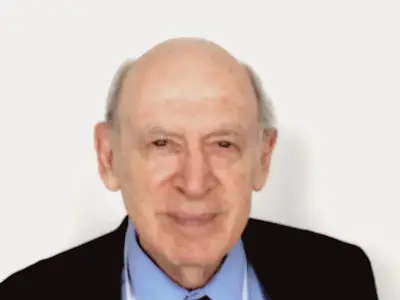
Jerome Isaac Friedman is an American physicist. He is Institute Professor and Professor of Physics, Emeritus, at the Massachusetts Institute of Technology. He won the 1990 Nobel Prize in Physics along with Henry Kendall and Richard Taylor, for work showing an internal structure for protons later known to be quarks. Friedman sits on the Board of Sponsors of the Bulletin of the Atomic Scientists.
