John Stuart Mill Quotes
The principle which regulates the existing social relations between the two sexes—the legal subordination of one sex to the other—is wrong itself, and now one of the chief hindrances to human improvement
John Stuart Mill, 1806-1873, Member of Parliament, British Political Economist, The Subjugation of Women, 1869
Sourced by: Eigen's Political and Historical Quotations


Scientist and double Nobel Prize winner, Marie Curie, 1867-1934, was rejected for membership at the French Académie des Sciences. She never allowed her name to be submitted again and for years refused to allow her work to be published by the Académie.


Despite this pronouncement which kept Caliphs from being female, modern Islamic states (Pakistan, Indonesia) have had female Presidents.

Nixon did however make some minor appointments of females. One irony of this statement is of all the Presidents in American history, he was probably the most erratic and emotional.

Golden was one of the leading theater producers of the 1920s and 1930s. There is even a theater on Broadway named after him. This statement reflects a common attitude of the late 1930s of even many educated people. A few like Eleanor Roosevelt saw such a statement for what it was—ridiculous and responded publicly – {636785} . Note that for many years, this was a self-fulfilling statement. Producers like Golden thought women could not be great playwrights and therefore would never produce a play authored by a woman. Then others would use the fact that there were no even good plays that were written by female authors as evidence of the act that women could not be great playwrights.


Vladimir Lenin


The CAA was the Civil Aeronautics Administration, the forerunner to the Federal Aviation Administration (FAA).
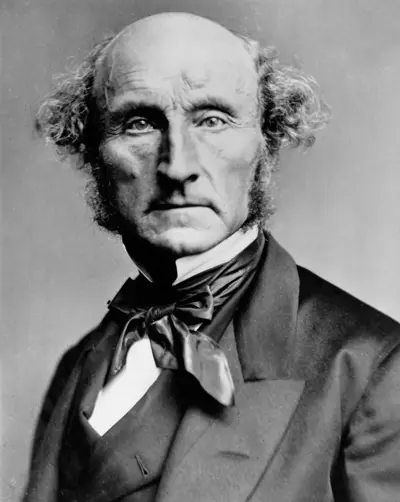
John Stuart Mill, usually cited as J. S. Mill, was an English philosopher, political economist, Member of Parliament, and civil servant. One of the most influential thinkers in the history of classical liberalism, he contributed widely to social theory, political theory, and political economy. Dubbed "the most influential English-speaking philosopher of the nineteenth century", he conceived of liberty as justifying the freedom of the individual in opposition to unlimited state and social control.
