Mark Twain Quotes
… the principle of give and take--give one and take ten--the principle of diplomacy.
Samuel Langhorne Clemens, 1835-1910
Mark Twain, Writer, Founder, Anti-Imperialist League, “Dinner to Mr. Choate’s speech”
Sourced by: Eigen's Political and Historical Quotations


This proverb is particularly relevant to the legislative process where coalitions of legislators trade off support for other issues to get support on a current issue. The problem is that someone who will support you only because you offer him something, might also abandon you if the other side offers him more.


While it is true that there is a powerful minority of Palestinians and Palestinian organizations—Hamas & Hezbollah, for example whose official position is that there must be no compromise with Israel and Jews must be killed unless they convert to Islam, there are ultra-orthodox, religious, Jewish groups who believe that all the land in dispute was given to the Jews by God and there can be no compromise. The majority of Israelis believe that there is no Palestinian leadership who can stand up to the powerful minorities. The majority of Palestinians believe that the Israeli governments will never stand up to thieir powerful minorities. The Israeli Prime Minister was trying to signal the Palestinians, that if they compromise, the Israelis will also, but neither side has a lot of credibility when it comes to land, borders, and religious identity and that is especially true of this Israeli Prime Minister, who many Israelis (and many Americans) doubt that he will compromise on the land and borders with all the Israeli settlers already inhabiting enclaves of what is, by every law (International, Israeli, and traditional Arab—with the exception of God’s law of the Old Testament—which agrees that the Israelis or the Jewish People do not have title to or control over the lands outside of Israel proper.


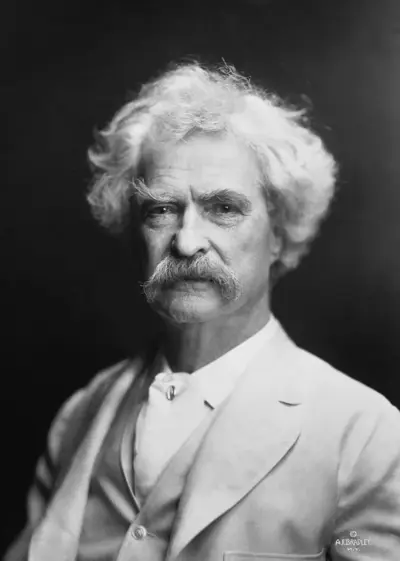
Samuel Langhorne Clemens, known by his pen name Mark Twain, was an American writer, humorist, entrepreneur, publisher, and lecturer. He was lauded as the "greatest humorist the United States has produced," and William Faulkner called him "the father of American literature". His novels include The Adventures of Tom Sawyer (1876) and its sequel, the Adventures of Huckleberry Finn (1884), the latter often called "The Great American Novel".
