Leonard Henry Courtney Quotes
The price of peace is eternal vigilance.
This is a variant of the famous linkage of liberty with eternal viligance. See {626344} and {235421}.
Leonard Henry Courtney, 1832-1918, English Member of Parliament, President of the Royal Statistical Society, Quoted in G. P. Gooch, The Life Of Lord Courtney
Sourced by: Eigen's Political and Historical Quotations

For an Americanized version of this sentiment, see below, Wendell Phillips {626344}.


There were many who thought that the Russians would view the Mutual Security Act as aggressive and they might respond with some kind of aggressive retaliation and this could lead to war. Others felt that containment would reduce the likelihood of war.


3rd Earl Russell of Kingston. The military weak nations agreed with him, but the militarily strong ones did not—especially America and England which had the Atomic Bomb when others did not.


Hobson, like Mark Twain in America, was a major critic of imperialism.


The Republican controlled Senate had turned down the ratification of the League of Nations presented by Democratic President Wilson, and looked like they would turn down any international treaty even if presented by a Republican President. This statement allowed the treaty ratification by only a few votes. However, after that the Senate turned down our participation in the Permanent Court of Arbitration at the Hague. See {640099}.


1st Earl Baldwin of Bewdley. Chamberlain was about to leave for the Munich Conference where his appeasement emboldened Hitler and the Germans and dashed all hope of peace. Baldwin was out of office, but his support of the Munich appeasement changed his image from that of a popular statesman, to a craven appeaser. See {626930} for Churchill’s view of Baldwin.


The documentation of this quotation comes from a memorandum summarizing the meeting written by Presidential aide Harry Hopkins.


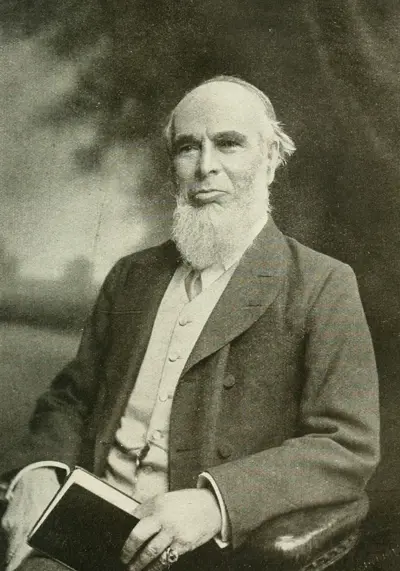
- Born: July 6, 1832
- Died: May 12, 1918
- Nationality:
- Profession:
Leonard Henry Courtney, 1st Baron Courtney of Penwith PC was a radical British politician, and an academic, who became famous after being advocate of proportional representation in Parliament and acting as an opponent of imperialism and militarism.
