Vilfredo Pareto Quotes
The plutocracy has invented countless makeshift programs, such as generating enormous public debt that plutocrats know they will never be able to repay, levies on capital, taxes which exhaust the incomes of those who do not speculate, sumtuary laws which have historically proven useless, and other similar measures. The principal goal of each of these measures is to deceive the multitudes.
Vilfredo Pareto, 1848-1923, Italian sociologist, economist and philosopher, “The Transformation of Democracy”, Revista di Milano, ~1920
Sourced by: Eigen's Political and Historical Quotations


At the time, the George W. Bush Administration policy was to have the United States running a very large trade and budget deficit—the largest in the history of the world. In order to finance the deficit, the U. S. Government had to borrow money and it did so by selling bonds and other financial instruments. Many of these were purchased by Asians, but Paul’s point was that they were “propping up” American spending habits and might not continue to do so.


See {604501} for another of his statements. It was Alexander Hamilton who called the national debt a national blessing. See {207891}. Jackson was convinced that a moneyed class who held the national debt could dictate to any administration by threatening to not renew their bonds. The same concern was expressed at the beginning of the 21st century regarding the Chinese and the Middle Eastern countries which held do many of our bonds.


This is an excellent historical quotations showing how our government financed the Spanish American War. Wars have always placed economic stress on the nations which wage then. In the American Revolution we borrowed from individuals and from France. After that all our wars were financed by a combination of war bond sales, other borrowing, and tax increases—all except the George W, Bush Afghanistan and Iraq Wars which were not funded thus complicating an economic crises caused by Bush’s Great Recession. While some critics saw Bush’s actions as reprehensible and irresponsible—it was the only time in American history where tax rates were cut in wartime, Bush’s team had a plan. They had an ideological point of view that said that major tax cuts would spur the economy and lead to MORE government revenue as a result of the growth that would come. However, in this case there not only was no growth, but there was the worst recession in American History. But there was a plan to finance the war—it just went awry.
Historically, this is the occasion where the war debt from the Revolution and the War of 1812 was paid off. It was one of the few times that the nation was debt free.

This is a an interesting political and historical quotation because it shows how left and right gets redefined in each age. Here we have a quotation of two sentences. By 21st century American definitions, the first statement would line Say up with the Right Wing. The second clause of the second sentence could have been written by an extreme Marxist and would be Left Wing. Definitions and norms change and individuals even change their positions as they have more experience and reflect more on their views.


This remarkable quotation illustrated the historical hatred aroused by the concept of government debt. Bryan, a religious man, states that debt is worse than murder. But a little over 100 years later, George W. Bush, also a very religious man, incurs a debt larger than all Presidents before him combined. Yet he thought it virtuous and best for the country. Both men were fundamentalist Christians.


some of the 1 percent Not all of the superrich in America are like this. Bill Gates and Warren Buffet, two of the richest Americans, for example, are supporters of these important programs for many citizens. However, the Koch Brothers, Senator Sanders best example, had $87 Billion and earned $12 Billion more that year. Yet they also made great efforts and spend large sums of money to take away the Social Security, Medicaid.


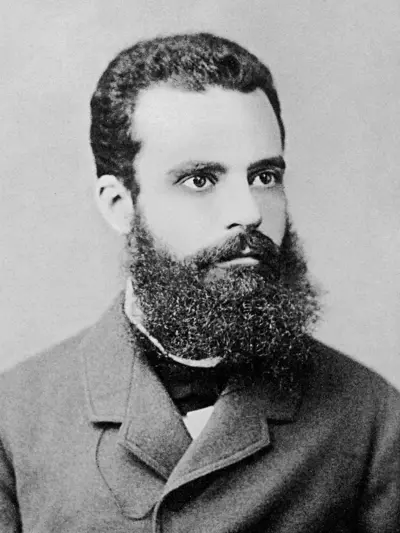
Vilfredo Federico Damaso Pareto was an Italian civil engineer, sociologist, economist, political scientist, and philosopher. He made several important contributions to economics, particularly in the study of income distribution and in the analysis of individuals' choices. He was also responsible for popularising the use of the term "elite" in social analysis.
