Cassius Marcellus Clay Quotes
The pistol and Bowie knife are as sacred to us as the gown and the pulpit.
Cassius Marcellus Clay, 1810-1903, U. S. Ambassador to Russia, Kentucky State Legislator & Southern Abolitionist, Statement on Arms
Sourced by: Eigen's Political and Historical Quotations


The Israeli experience with the Muslims of Palestine, the U. S. in Afghanistan and Iraq showed that many Muslim terrorists not only take shelter from mosques but use them as weapons storage and shooting platforms. The Mullahs are either too weak to discourage the practice or support the terrorism.


Although written by a science fiction writer, this is one of the best quotations arguing for widespread gun ownership.


She advocated armed self-defense for Blacks.


Carmichael was bombastic and many whites feared him and his organization. Lewis, however, a very religious young man however did much more to organize the critical Civil Rights Events and could communicate with all. After the peak of the Civil Rights movement, Carmichael lost much of his influence while Lewis was selected by the Blacks of Atlanta to represent them in Congress where he had a brilliant career—always the Christ-loving, mild-mannered leader who was supported by Christians and non-Christians alike.

The gun control debate has been so polarizing over the years, that the extremists on each side actually consider the other side as doing great damage to the society if not causing death of innocent people.

This happened to be the famous Colored Regiment depicted so well in the movie, Glory. However, these sentiments were also given to other soldiers in the state. Fighting against slavery was not only the patriotic thing to do, not only the humane thing, not inly the civilized thing to do, but it was a Christian Religious duty. Similar sendiment can be seen much in speeches and literature of the time. The words of the Battle Hymn of the Republic is another example. Ending slavery was a Holy requirement of God.

Stalin did not want any political opposition with its own militia. American gun control opponents often cite this quotation to show that in Russia, Stalin achieved dictatorial power by disarming the population in general and only allowing government officials to have guns. They argue that even Stalin could not have tyrannized the entire Soviet Union if every citizen had the right to bear arms as provided for by the Second Amendment.
This is a very clear statement of a theory offered by some gun advocates. Opponents observe that if this were true, the parts of the country that had the highest gun ownership would have the lowest gun deaths and crime in general, but that is not true. Obversely, when some jurisdictions like Florida have made guns easier to obtain, the crime rate has not increased as some gun opponents would predict.

This quotation is often provided by historians studying the gun culture of America. Even conservatives like Ames did not see a gun or an armed citizenry as important to America’s survival or well being. Contrary to popular belief, even the State Militias’ whose rights to bear arms was written into the Second Amendment did not bother to do so. In 1803 only three state militias had rifle companies. Firearms of the time were expensive, difficult to maintain, and hard to use. Unless one needed them for defense, it was too much of a bother. Even in the aftermath of the War of 1812 only 30% of Massachusetts adult men owned guns; by 1839, the rate was below 10%. It was on the frontier where guns were popular and necessary. See {613080}.

Even allowing for a certain amount of exaggeration, it is clear that there were many Americans who were personally armed in this period.


While the militia had very few arms, Van Rensselaer had no military training and commanded a critical army because of his political connections—common at the time. After he botched the Battle of Queenston Heights he returned to politics but his military failure dogged him for the rest of his career. The quotation is yet another that illustrated the myth of all Americans armed and ready to fight for the nation. There was no gun culture then, and guns were expensive and a minority of Americans owned them. In this case less than 20 percent of the American militia owned a gun. And Congress would just not at the time spend the money for weapons.

The Factory had been established by the State of Virginia in 1775 to make guns. America filled with armed Americans in the Colonial era was a myth. Early America was not a gun culture. Guns were expensive, needed maintenance, took too long to reload, and were not as effective for most purposes as other weapons like hatchets and knives. American Colonial war was mostly hand to hand combat with relatively little shooting. Less than one fourth of the men joining Washington’s army owned guns. Gun factories could not survive for want of customers and gunsmiths went into other occupations. See {613052}. With the rebellion, it was critical to manufacture guns to arm the soldiers who had not their own. But the efforts like this were relatively feeble. The factory director who made not a single gun in over a year was then promoted to Commissary General of Munitions in the Continental Army. He was married to George Washington’s sister. He did however finance much of the munitions he procured with his own personal funds so made up in wealth and patriotism what he lacked in manufacturing skill.

This is historically a very important quotation. It shows that gun control was existant in Colonial America. The violation of the gun laws were so serious that the Connecticut Council itself heard and tried the case and it was not even handled by the constable. On the same day, they also fined Bartholomew Barnardt for allowing his son to shoot a militia musket in his possession. Today, most states would not be allowed much gun control as politically there is a belief that in Colonial America gun use and ownership was almost universal. That assertion appears to be untrue. See {613056} and {613057}.
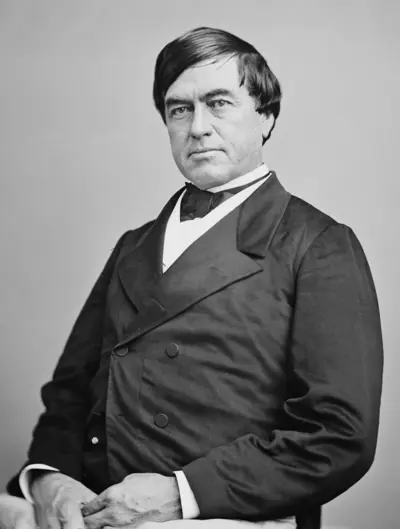
Cassius Marcellus Clay, nicknamed the "Lion of White Hall," was a Kentucky planter, politician, and emancipationist who worked for the abolition of slavery. He was a founding member of the Republican Party in Kentucky, and was appointed by President Abraham Lincoln as the United States minister to Russia. Clay is credited with gaining Russian support for the Union during the American Civil War.
