Nikola Tesla Quotes
The only method compatible with our notions of civilization and the race is to prevent the breeding of the unfit by sterilization and the deliberate guidance of the mating instinct. [...] The trend of opinion among eugenists is that we must make marriage more difficult. Certainly no one who is not a desirable parent should be permitted to produce progeny.
Tesla, Nikola, and George Sylvester Viereck. "A Machine to End War." Liberty, Macfadden Publications, Feb. 1935.


The Association commissioned a study to develop:
This book was the first popular attempt to spread the eugenics concept. Is was translated into German in 1925 and unfortunately read by Adolf Hitler who sent Grant a complimentary letter. See {603544}

There was a small, but very vocal, part of the American population who argued that certain people should not be allowed to have children as they were inferior. Before Hitler started his problem of forced sterilization, many of our states—allowed forced sterilization of people they did not feel were desirable to bear children. Hitler was very complementary to the American pseudo scientists who advocated this.

At the time there were some Americans who supported Hitler and Fascism. Even senior military men like Osborne.
Many Leading American supported forced sterilization of mentally handicapped people. Indiana passed the first forced sterilization laws and other states followed. The Supreme Court upheld the practice. See {603680}.
There was a substantial movement to prevent mentally defective and people of low intelligence from being able to reproduce. Over 20 states, with the approval of the then Supreme Court performed forced state sterilizations. Of course the then definition of “degenerates” changed from state to state. A century later, American values changed so much that there is no state that would even consider involuntary sterilization and if they did, the Courts would hold it un-Constitutional.
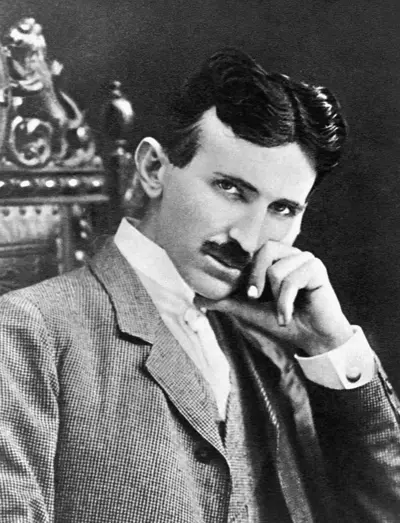
Nikola Tesla was a Serbian-American inventor, electrical engineer, mechanical engineer, and futurist best known for his contributions to the design of the modern alternating current (AC) electricity supply system.
