American Breeders’ Association Quotes
the practical means for cutting off the defective germ-plasm in the American population
The Association commissioned a study to develop:
American Breeders Association, 1911
Sourced by: Eigen's Political and Historical Quotations

The Eugenics Record Office was an activist organization advocating the forced sterilization of those people who they deemed to be inferior from a hereditary point of view. Most Americans are today shocked to find that this organization and its ideas were so influential that more than 30 states had passed similar laws. Only California and Virginia however were zealous in carrying them out . By 1935, 20,000 forced sterilizations had been carried out in the United States. The Supreme Court at the time even found such laws Constitutional. See {603680}.

This book was the first popular attempt to spread the eugenics concept. Is was translated into German in 1925 and unfortunately read by Adolf Hitler who sent Grant a complimentary letter. See {603544}

400,000 Germans were forcibly sterilized for “mental illness”, “slow learning”. “poor posture”, and a number of other characteristics. Soon, sterilization would be replaced by murders and extermination. Ironically, Hitler and other Nazis would quote American advocates of eugenics to further justify their practice of forced sterilization. A number of American states actually sentenced “defective” people to forced sterization.


Many Leading American supported forced sterilization of mentally handicapped people. Indiana passed the first forced sterilization laws and other states followed. The Supreme Court upheld the practice. See {603680}.
There was a substantial movement to prevent mentally defective and people of low intelligence from being able to reproduce. Over 20 states, with the approval of the then Supreme Court performed forced state sterilizations. Of course the then definition of “degenerates” changed from state to state. A century later, American values changed so much that there is no state that would even consider involuntary sterilization and if they did, the Courts would hold it un-Constitutional.


Hitler’s Germany promptly passed the law which was the beginning of their program of human extermination and the Holocaust.


It is ironic that Hitler obtained part of his sick philosophy from an American writer. Grant was advocating forced sterilization of mental defectives. However, in the context of Germany’s history of racism and anti-Semitism, Hitler carried the notion to its ultimate extreme. See {602054}


Writing a majority opinion allowing forced sterilization of the mentally retarded: In the ultimate tragic irony, the legal opinion in the case never questioned the assumptions of the case—that Carrie Buck, her mother, and daughter were all mentally retarded. Later scientists established that two of the three were normal and there was no real evidence about Buck’s mother. It seems that sexual promiscuity of unmarried women was the evidence upon which mental retardation was reached.

At the time there were some Americans who supported Hitler and Fascism. Even senior military men like Osborne.
In one of the disgraces of American history, there was then an active Eugenics movement that advocated forced sterilization of people who were “unfit” to bear children. Over 20 states sterilized tens of thousands of American citizens who did not meet the “standards” of the state authorities who set the criteria of fitness. Sanger was one of those who called the implementation of Eugenics into question. However, note that even she accepted the notion of forced sterilization of mentally retarded people. Ironically, while some types of mental defects are heredity determined, others are not. The issue is a slippery slope under any conditions.
Actually, while such selective breeding is possible in all animals, the selection for a single trait almost always produces other unintended and unanticipated traits and these could be devastating to the “new generation”, unpleasant, benign, or anything else. At the time selective breeding was the only possible tool to produce “desirable” traits in an animal or to eliminate what someone things of as “undesirable” traits. Today, our understanding of the human genome and genetic engineering offers a much more reliable possibility of affecting animal traits without as many risks of random and unintended consequences that are present with breeding.


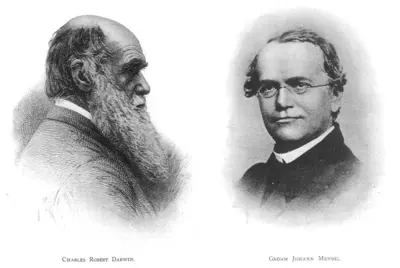
The American Breeders Association, founded in 1903, was the first scientific organization in the U.S. to recognize the importance of Mendel’s Laws and to support eugenic research. At the first annual meeting in St Louis, University of Missouri Professor of Agriculture Fredrick B. Mumford became one of the Association’s first officers. By 1914, the organization had become the American Genetic Association and the magazine was renamed The Journal of Heredity. Professor Mumford served as chairman of the Breeding Horse Hybrids Committee—was one on eugenics. In the first issue published under the new name, Alexander Graham Bell, who would serve as the honorary president for the 2nd International Eugenics Congress in 1921, contributed an article entitled “How to Improve the Race.”
