Madison Grant Quotes
Mistaken
regard for what are believed to be divine laws and a sentimental belief in the sanctity of human
life tend to prevent both the elimination of defective infants and the sterilization of such adults as
are themselves of no value to the community. The laws of nature require the obliteration of the
unfit and human life is valuable only when it is of use to the community or race.
Grant, Madison. The Passing of the Great Race, or The Racial Basis of European History. Charles Scribner's Sons, 1916, p. 49.


At the time there were some Americans who supported Hitler and Fascism. Even senior military men like Osborne.

Fisher, a brilliant scientist and mathematician, engaged in some major blunders like denying that tobacco had any relationship to lung cancer and other disease. This was another. His “conclusion” that the more “successful” members of society should breed in preference to the less successful. There are three major fallacies in his argument and that of other eugenics supporters other than the obvious ethical and moral problems. First, human success in any society is determined by both genetic and environmental factors. In general, it is currently impossible to know who the successful would be if environmental factors were equal. Second, our concept of success is quite narrow from an evolutionary point of view. The most successful humans might be those who produce that most children, or those who extend man’s habitat, or those who will be most resistant to a pandemic that will arise in the near future. Third, by the standards of much of English society at the time, the most “successful” people were the monarchy and heredity aristocracy, There was already too much inbreeding in these groups and increasing this groups breeding rather than others would not only weaken the species over time, but would limit the variation that is necessary for natural selection and further evolution of the human species.

This quote was the beginning of the now discredited Eugenics movement. The essential problems were twofold: One was that someone had to decide which characteristics were desirable and undesirable, and there is wide difference of opinion that there is no way of resolving. Genocide is the result of Eugenics taken to extremes. Second, it the issue of human rights. No person, organization, or government has the right to tell a particular individual what genetic characteristics he/she may have with his/her children. Note that the issue of Population Control for size was also a part of the early Eugenics movement but is a totally separate issue. It is the voluntary verses the compulsory nature of Population control the is the critical ethical element.


This book was the first popular attempt to spread the eugenics concept. Is was translated into German in 1925 and unfortunately read by Adolf Hitler who sent Grant a complimentary letter. See {603544}


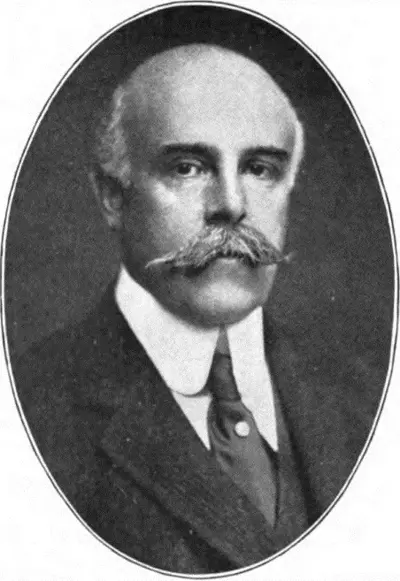
Madison Grant was an American lawyer, writer, and zoologist known primarily for his work as a eugenicist and conservationist, an advocate of scientific racism and as one of the leading thinkers and activists of the Progressive Era.
