David Attenborough Quotes
The only acceptable way to solve ecological problems is if you can persuade people to have fewer children. In the Victorian times, there were families of 15 children. Someone like Edward Lear, he was the last of 21 children. And so what we have to think about is offering people the alternative choice. And in the West, that's what's happening. The birth rate has been dropping steadily and still is. I'm wanting human beings to be better off so they don't view children as an insurance for the future.
Attenborough, David. Interview by Decca Aitkenhead. The Guardian, 13 Jan. 2009.


In Burundi, family land is divided among the male children of a family. The average Burundian woman has 6.3 children, nearly triple the international fertility rate. With this fertility rate, the plots of land for each person inevitably get smaller and smaller over time. At 10,745 square miles, Burundi is slightly smaller than the U.S. state of Maryland, but it holds nearly twice as many people: about 10 million. The small plots of land are inefficient to farm and provide subsistence. So the nation was in a crises as there was little industrialization and land was essential for existence for most Burundians. See {35808} and {35809}.


The logic is that communities and areas—even countries have finite resources. Since we have a welfare society in which we will not allow people to starve, society must provide for children whose parents cannot. Therefore, individuals ought not to be allowed to breed beyond their ability to care for the children for if many would do so, the capacity of the community could be overwhelmed. A middle ground is that while the final decision should be left to the individual family, the society ought to educate and persuade members to limit their breeding.
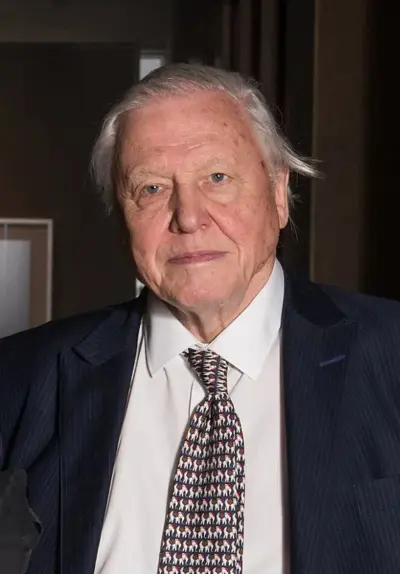
Sir David Frederick Attenborough is an English broadcaster and natural historian. He is best known for writing and presenting, in conjunction with the BBC Natural History Unit, the nine natural history documentary series forming the Life collection that together constitute a comprehensive survey of animal and plant life on Earth. He is a former senior manager at the BBC, having served as controller of BBC Two and director of programming for BBC Television in the 1960s and 1970s. He is the only person to have won BAFTAs for programmes in each of black and white, colour, HD, 3D and 4K.
