Richard Nixon Quotes
One of the most serious challenges to human destiny in the last third of this century will be the growth of population …. When future generations evaluate the record of. our time, one of the most important factors in their judgment will be the way in which we respond to population growth
Richard M. Nixon, 1913-1994, 37th President of the United States (Republican, CA), Message to Congress, 1969
Sourced by: Eigen's Political and Historical Quotations


The Clinton Administration decided not to issue the directive. To do so would have embroiled the administration in a huge abortion debate as the NSC has previously observed that no nation has ever reduced its population growth without using abortion as one of the techniques. India, for example, utilized both abortion and sterilization—both offensive to segments of American public opinion.

In Burundi, family land is divided among the male children of a family. The average Burundian woman has 6.3 children, nearly triple the international fertility rate. With this fertility rate, the plots of land for each person inevitably get smaller and smaller over time. At 10,745 square miles, Burundi is slightly smaller than the U.S. state of Maryland, but it holds nearly twice as many people: about 10 million. The small plots of land are inefficient to farm and provide subsistence. So the nation was in a crises as there was little industrialization and land was essential for existence for most Burundians. See {35808} and {35809}.


Johnson insisted that he would not provide food to ease India’s famine until the nation adopted a family planning program including education about all methods of birth control and making available devices such as condoms to India’s poor


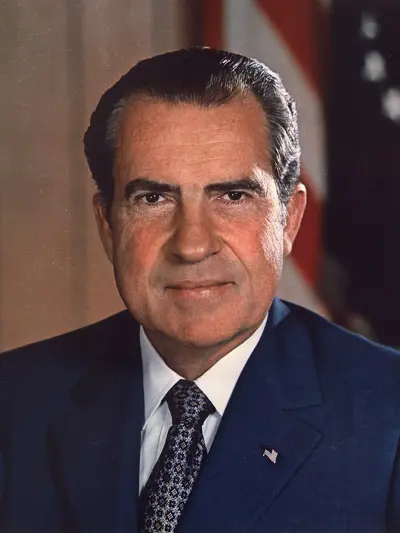
Richard Milhous Nixon was the 37th president of the United States, serving from 1969 to 1974. A member of the Republican Party, Nixon previously served as the 36th vice president from 1953 to 1961, having risen to national prominence as a representative and senator from California. After five years in the White House that saw the conclusion to the U.S. involvement in the Vietnam War, détente with the Soviet Union and China, and the establishment of the Environmental Protection Agency, he became the only president to resign from the office, following the Watergate scandal.
