Helen Keller Quotes
Once it was necessary that the people should multiply and be fruitful if the race was to survive. But now to preserve the race it is necessary that people hold back the power of propagation.
Keller, Helen. "My View on Birth Control." Birth Control Review, vol. 3, no. 5, May 1919, p. 5.


In Burundi, family land is divided among the male children of a family. The average Burundian woman has 6.3 children, nearly triple the international fertility rate. With this fertility rate, the plots of land for each person inevitably get smaller and smaller over time. At 10,745 square miles, Burundi is slightly smaller than the U.S. state of Maryland, but it holds nearly twice as many people: about 10 million. The small plots of land are inefficient to farm and provide subsistence. So the nation was in a crises as there was little industrialization and land was essential for existence for most Burundians. See {35808} and {35809}.


The logic is that communities and areas—even countries have finite resources. Since we have a welfare society in which we will not allow people to starve, society must provide for children whose parents cannot. Therefore, individuals ought not to be allowed to breed beyond their ability to care for the children for if many would do so, the capacity of the community could be overwhelmed. A middle ground is that while the final decision should be left to the individual family, the society ought to educate and persuade members to limit their breeding.
The Clinton Administration decided not to issue the directive. To do so would have embroiled the administration in a huge abortion debate as the NSC has previously observed that no nation has ever reduced its population growth without using abortion as one of the techniques. India, for example, utilized both abortion and sterilization—both offensive to segments of American public opinion.


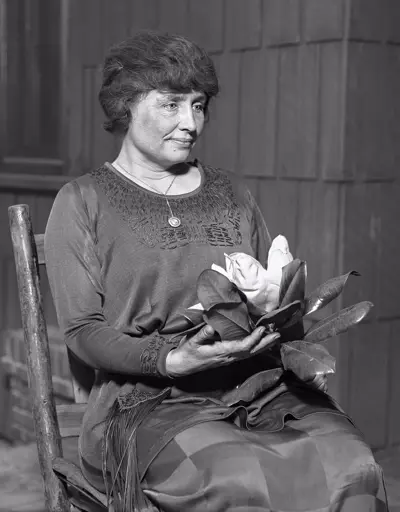
Helen Adams Keller was an American author, disability rights advocate, political activist and lecturer. Born in West Tuscumbia, Alabama, she lost her sight and hearing after a bout of illness at the age of nineteen months. She then communicated primarily using home signs until the age of seven when she met her first teacher and life-long companion Anne Sullivan, who taught her language, including reading and writing; Sullivan's first lessons involved spelling words on Keller's hand to show her the names of objects around her. She also learned how to speak and to understand other people's speech using the Tadoma method. After an education at both specialist and mainstream schools, she attended Radcliffe College of Harvard University and became the first deafblind person to earn a Bachelor of Arts degree. She worked for the American Foundation for the Blind (AFB) from 1924 until 1968, during which time she toured the United States and traveled to 39 countries around the globe advocating for those with vision loss.
