Christian de Duve Quotes
We have access to practical, ethical and scientifically established methods of birth control. So I think that is the most ethical way to reduce our population.
de Duve, Christian. Interview by Claudia Dreifus. "A Biologist's Late-Life Defense of Women." The New York Times, 21 Nov. 2011.

In Burundi, family land is divided among the male children of a family. The average Burundian woman has 6.3 children, nearly triple the international fertility rate. With this fertility rate, the plots of land for each person inevitably get smaller and smaller over time. At 10,745 square miles, Burundi is slightly smaller than the U.S. state of Maryland, but it holds nearly twice as many people: about 10 million. The small plots of land are inefficient to farm and provide subsistence. So the nation was in a crises as there was little industrialization and land was essential for existence for most Burundians. See {35808} and {35809}.


History has shown that as girls and women get educated and learn about family planning, their children are healthier and have better chances of survival and despite the lower death rate the population trend slows as a result of family planning.


This proposal totally violates the freedom of many women who may be poor. Yet they may be orthodox Roman Catholics and birth control would be an anathema to them. Women’s freedom to control their own bodies requires that they have the right be decide whether to use birth control or not. This abuse of women’s freedom however is not unexpected from KKK members whose program advocates the denial of religious freedom and any rights to Blacks.

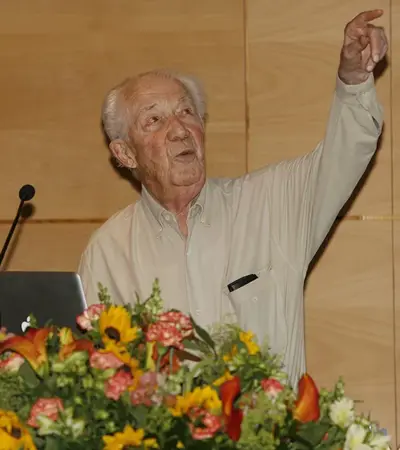
Christian René Marie Joseph, Viscount de Duve was a Nobel Prize-winning English-born Belgian cytologist and biochemist. He made serendipitous discoveries of two cell organelles, peroxisome and lysosome, for which he shared the Nobel Prize in Physiology or Medicine in 1974 with Albert Claude and George E. Palade ("for their discoveries concerning the structural and functional organization of the cell"). In addition to peroxisome and lysosome, he invented the scientific names such as autophagy, endocytosis, and exocytosis in a single occasion.
