Margaret Mitchell Quotes
Babies, babies, babies. Why did God make so many babies? But no, God didn't make them. Stupid people made them.
Mitchell, Margaret. Gone with the Wind. Macmillan, 1936, p. 385.


In Burundi, family land is divided among the male children of a family. The average Burundian woman has 6.3 children, nearly triple the international fertility rate. With this fertility rate, the plots of land for each person inevitably get smaller and smaller over time. At 10,745 square miles, Burundi is slightly smaller than the U.S. state of Maryland, but it holds nearly twice as many people: about 10 million. The small plots of land are inefficient to farm and provide subsistence. So the nation was in a crises as there was little industrialization and land was essential for existence for most Burundians. See {35808} and {35809}.

As an example, if a woman is of childbearing age and does not pick up her regular subscription for birth control pills, the government requires that a phone call be made to the woman to “remind” her.


Craig’s bias against Catholics was so great that it never occurred to him that he was addressing a Catholic Prime Minister.


The logic is that communities and areas—even countries have finite resources. Since we have a welfare society in which we will not allow people to starve, society must provide for children whose parents cannot. Therefore, individuals ought not to be allowed to breed beyond their ability to care for the children for if many would do so, the capacity of the community could be overwhelmed. A middle ground is that while the final decision should be left to the individual family, the society ought to educate and persuade members to limit their breeding.


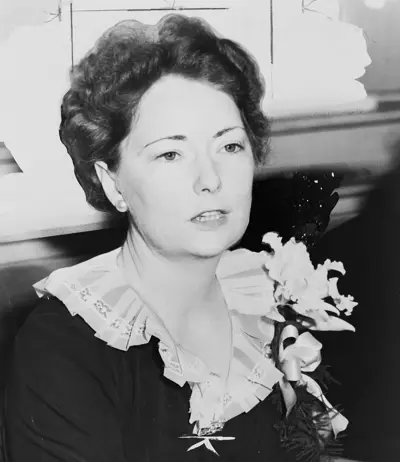
Margaret Munnerlyn Mitchell was an American novelist and journalist. Mitchell wrote only one novel, published during her lifetime, the American Civil War-era novel Gone with the Wind, for which she won the National Book Award for Most Distinguished Novel of 1936 and the Pulitzer Prize for Fiction in 1937. In recent years long after her death, a collection of Mitchell's girlhood writings and a novella she wrote as a teenager, titled Lost Laysen, have been published. A collection of newspaper articles written by Mitchell for The Atlanta Journal was republished in book form.
