Benjamin Franklin Quotes
Children when irregularly produced are a cause of great inconvenience.
Benjamin Franklin, 1706-1790, Member of the Continental Congress & the Constitutional Convention, Governor of Pennsylvania, President of the Pennsylvania Assembly, U.S. Minister to France, Quoted in Brands, The First American
Sourced by: Eigen's Political and Historical Quotations


This is an important reason to preserve the right of women to have abortions that few people make out loud in public, but is a major factor in the vast majority of the decisions women make each year to have an abortion.


At the time, condoms and other forms of contraceptives were illegal to buy, sell, possess or own. As late as 1963 a Connecticut druggist was sentenced to jail for filling a doctor’s prescription for condoms and selling them to a married couple even thought the woman might die if she again became pregnant. The Supreme Court (Griswald v. Connecticut) established that a woman had a right to control her own reproductive cycle and the government had no business interfering with a privacy right possessed by a couple. Roe v. Wade established the right to an abortion. The same moral compunctions used with abortion were, and still are used by some to oppose any form of artificial birth control. They argued: preventing a life was as serious a moral failure as taking one. Many Catholics, many evangelical and fundamentalist protestants, and some orthodox Muslims are today morally opposed to birth control and believe that the government should ban birth control as it once was in the United States.
The logic is that communities and areas—even countries have finite resources. Since we have a welfare society in which we will not allow people to starve, society must provide for children whose parents cannot. Therefore, individuals ought not to be allowed to breed beyond their ability to care for the children for if many would do so, the capacity of the community could be overwhelmed. A middle ground is that while the final decision should be left to the individual family, the society ought to educate and persuade members to limit their breeding.

Birth control was not commonly available and knowledge about it was also sparce. Having many children was the “will of God” in common parlance.


One of the most contentious activities in all political history is a government trying to regulate the number of children which its citizens can have. When a government tries to do this, they run into opposition by some religious people who oppose birth control in general or some birth control methods (eg abortion). In addition it is opposed by many people who do not want the government involved at all in a decision that is so personal. Yet many governments, under the press of perceived overpopulation, or in an effort to limit mental retardation, have attempted such regulation and that includes the United States where 40 states have at one time or another practiced forced sterilization of people who the state believed were unfit to bear children. China and India—the largest nations of the world—have both maintained government policies and practices to control population with China making it illegal to have more than 1 child. These programs have reduced the population counts, but at a terrible ethical cost and resentment of the affected people.

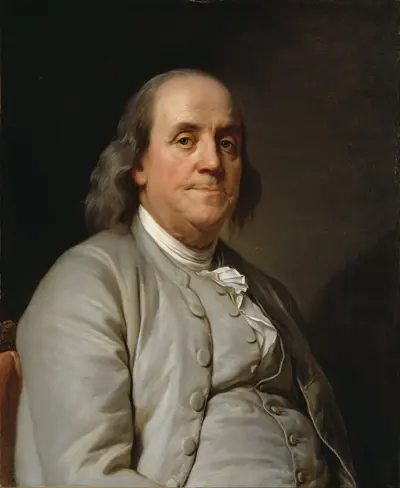
Benjamin Franklin FRS FRSA FRSE was one of the Founding Fathers of the United States. A polymath, he was a leading writer, printer, political philosopher, politician, Freemason, postmaster, scientist, inventor, humorist, civic activist, statesman, and diplomat. As a scientist, he was a major figure in the American Enlightenment and the history of physics for his discoveries and theories regarding electricity. As an inventor, he is known for the lightning rod, bifocals, and the Franklin stove, among other inventions. He founded many civic organizations, including the Library Company, Philadelphia's first fire department, and the University of Pennsylvania.
