Dan Shechtman Quotes
The good news is world population growth rate decreases systematically and is expected to reach zero by 2050, thanks to urbanisation and women's education.
Shechtman, Dan. "Demographics, Technological Entrepreneurship and the Future of the World." Lindau Nobel Laureate Meetings, 2014.


The relationship of population increase economic growth is a critical one. If an underdeveloped country manages to have a 3% annual economic growth rate and also has a 3.2% population growth, at the end of the year, the average person is actually poorer than he was the previous year. South Korea, China, Thailand and India implemented successful population control and family planning programs before they were able to take advantage of economic development. To modernize, the country must be able to have a surplus of funds which can be invested in roads, schools, hospitals, and other facilities which can produce even more growth later. Too many new mouths to feed, clothe and care for can be a barrier to development even if the economy is reasonably good.


History has shown that as girls and women get educated and learn about family planning, their children are healthier and have better chances of survival and despite the lower death rate the population trend slows as a result of family planning.


This was the first issue of the publication. Population shortages vexed governments as much as population surpluses.


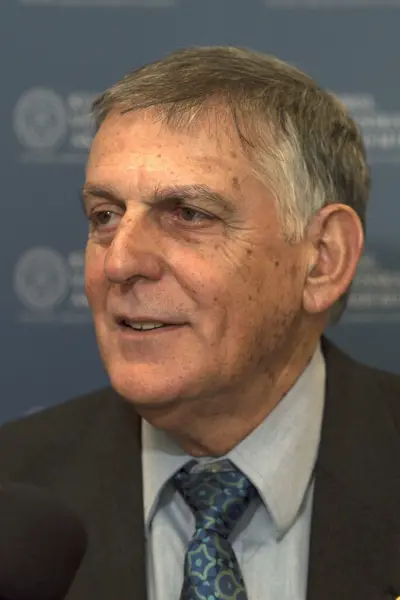
Dan Shechtman is the Philip Tobias Professor of Materials Science at the Technion – Israel Institute of Technology, an Associate of the US Department of Energy's Ames Laboratory, and Professor of Materials Science at Iowa State University. On April 8, 1982, while on sabbatical at the U.S. National Bureau of Standards in Washington, D.C., Shechtman discovered the icosahedral phase, which opened the new field of quasiperiodic crystals. Shechtman was awarded the 2011 Nobel Prize in Chemistry for the discovery of quasicrystals, making him one of six Israelis who have won the Nobel Prize in Chemistry.
