Hugo Chavez Quotes
The nationalization process will be carried out in accordance with the legal and constitutional framework, that, among other things, forbids expropriation.
Hugo Chavez, 1954-2013, President of Venezuela, Quoted in The Buenos Aires Herald, Argentina, January 11, 2007
Sourced by: Eigen's Political and Historical Quotations

Previous governments had attempted to privatize the economy and sold off many of the nationally owned enterprises. Morales, a socialist, began reversing the cycle and “nationalized” the natural gas supply which is plentiful. Bolivia had been getting a very small percentage compared with world standards and Morales renegotiated the percentage for the government, but left the management in private hands. So in that sense he did not “nationalize” the hydrocarbons. The Bolivian mines represented another problem entirely. For years, featherbedding had created tens of thousands of unnecessary jobs for the mining, nut necessary to the people who were employed and the economy. But private operators always wanted to reduce the number of workers to only what was needed. So the nationalization problem was to increase the productivity of the Bolivian mines, maintain the exports of the mined products and maintain the employment---a difficult balancing act.

1st Viscount Snowden. Nationalization is when a nation or state determines that certain industries of areas of the economy should be reserved for the government to operate. Private companies, if they have been operating a nationalized industry losse their rights to continue in that business and may even lose their physica assets in which case th form is supposed to be paid a fair price. In 21st century America we have very few nationalized industries. One of these is the manufacture of nuclear weapons. Communist counties have many if not most of the economy nationalized. From the 19th century socialism has evolved from a belief that most people will best be served by nationalization of most of th major economic functions. However, over time this did not meet Socialism’s other objectives and nationalism became less popular with socialists. Snowden, a leading socialist, wanted to get rid of the concept entirely, and today there are very few situations where there are calls for nationalis. Even the few remaining communist nations are privatizing (the opposite of nationalizing) some of their economy.


Ironically the far right wing Fascists and the far left wing Communists agreed on this point: nationalization.


The State Department pressured counties to involve the private sector of foreign countries in aid programs.


This quotation not only illustrates the typical Southern attitude at the time as the issue of Slavery began to be the subject of Federal governmental debate, but it also illustrates the incredible party flip flops over time. Ritchie was one of the leading Democratic Politicians of his day, and it was the Democrats who were opposed to Government. However, people without a knowledge of early American History might think that this quotation came from right wing Republicans of the early 21st century. By then, it was the Democrats who saw the important role of government. The Democrats were then extreme enemies of the Federal Government and were against freedom for Blacks and their rights, that the Republican Party was created and used government more than most Americans ever thought possible, ended slavery and permitted Negro voting and equality. Almost 200 years later it was the Democrats who were espousing the old Republican Views, and the Republicans holding the old Democratic view of government and adopting a more passive view on racial equality and justice.


The Catholic view on the subject varied from time to time, even with the same Pope. See {638558} for another quote from this Pope that gives a different point of view.
The Catholic view on the subject varied from time to time, even with the same Pope. See {360616} for another quote from this Pope that gives a different point of view.


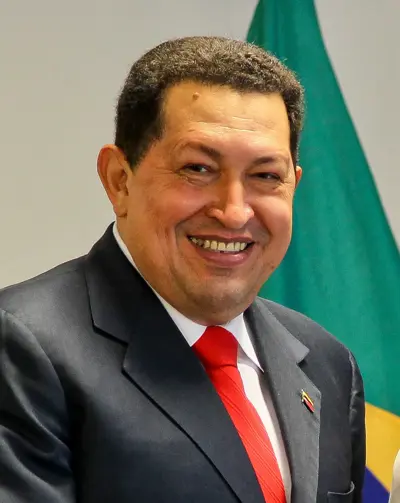
Hugo Rafael Chávez Frías was a Venezuelan politician who was president of Venezuela from 1999 until his death in 2013, except for a brief period in April 2002. Chávez was also leader of the Fifth Republic Movement political party from its foundation in 1997 until 2007, when it merged with several other parties to form the United Socialist Party of Venezuela (PSUV), which he led until 2012.
