Fiorello H. La Guardia Quotes
... the most expensive luxury the war produced.
Herbert Hoover had made a name for himself by his splendid administration of World War I famine relief, but he was also :
Fiorello H. La Guardia, 1882-1947, U. S. Congressman (Republican & Socialist, NY), New York City Mayor (Republican and Fusion Party), Quoted in The New York World, April 1, 1920
Sourced by: Eigen's Political and Historical Quotations


The Ambassador of Bavaria represented an area where the politicians saw democrats and socialists as their great enemy, as did many of the leading right wing conservatives in all of Germany. They believed that a great war would give them a chance to crush democratic socialism in Europe. Bethmann warned that just the opposite might result, and indeed it did. He was correct. Many of the crowned heads of Europe were deposed and the democratic socialists emerged as a major political factor in the victorious democracies. Bethmann-Hollweg, however, was not a strong leader and could not prevent the Conservatives, the military leaders, and Kaiser Wilhelm from initiating WWI.


Wilson was very candid that there would be high cost to war and sacrifice would be needed. See {584570} for other similar candor. This quotation was often used by critics of George W. Bush who initiated the Iraq War and then cut taxes for the rich, but then financed the war through the budgetary emergency appropriations bypassing the budget rules that the revenue must be specified to pay for it. His administration even claimed at an early stage in the war that the oil revenue from Iraq oil would defray the costs.


1st Earl Baldwin of Bewdley


The election of Franklin Delano Roosevelt for a third term


Essentially, the case of moral hazard was made against paying the slave owners. Lincoln took a pragmatic approach. However, not only was Northern opposition too strong for this proposal, but the Southern slave holders would never agree to selling their slaves. What Lincoln and most “pragmatic” Northerners did not realize is that even if the slave owners would get a fair market price for the slaves, they would be left with land and no way to work it. Their families would have no servants. They might have to work themselves like Northern farmers did, and their entire standard and style of living would be destroyed. Their sons were not well educated as many Northern young men were and were brought up to be gentlemen, politicians, and occasional soldiers—not work with their hands. They could not compete. And the slaveholders were right as the whole history of Reconstruction and backwardness demonstrated for more than 100 years.

Almost all economists believe that Harding had it totally wrong. WWII for example was one of the greatest increases in productivity in world history. The Civil War and the two world wars both were accompanied by many increases in industrial productivity. The losing side is usually totally devastated by war, and sometimes the winners are impoverished as with England and Russia in WWII. However, the North thrived in the Civil War and America did in WWII. Many economists say that war often impairs the economy of even a winning country in that the war expenditures generally are made at the expense of the civilian economy—infrastructure, public transportation, education, and in the decades following the war the lack of domestic investment in the war years reduces medium and long term growth.
since the end of WWI The railroads were nationalized for WWI and he ran them all as a government official

Slovenia was an unenthusiastic part of the Austro-Hungarian Empire and whose young males were required to serve as soldiers in the Empire’s armies. See {641812} for more on Conrad’s part in the war.


1st Viscount Grey of Fallodon

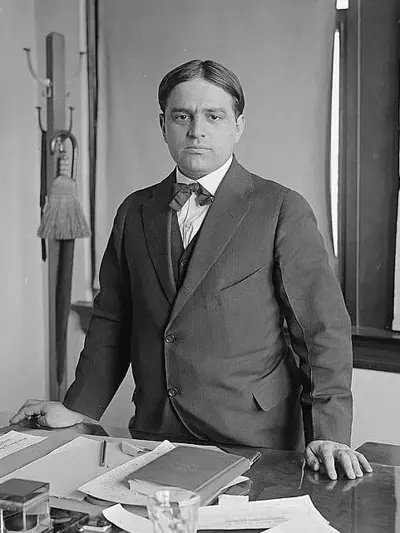
Fiorello Henry La Guardia was an American attorney and politician who represented New York in the House of Representatives and served as the 99th Mayor of New York City from 1934 to 1945. Known for his irascible, energetic, and charismatic personality and diminutive stature, La Guardia is acclaimed as one of the greatest mayors in American history. Though a Republican, La Guardia was frequently cross-endorsed by other parties, including the rival Democratic Party, under New York's electoral fusion laws.
