Richard Francis Burton Quotes
The men were wild as ourang-outans, and the women fit only to flog cattle.
Burton, Richard F. First Footsteps in East Africa; or, An Exploration of Harar. London: Longman, Brown, Green, and Longmans, 1856.


The English loved the operettas making fun of themselves. Some of the phrases such as this one ended up being used in serious political debate. See {616511}.


There were a few American Indian Tribes which practiced cannibalism.


See Ferdinand I for the Bulgarian denial {601322}.

As a British Loyalist officer, he and his men were dispatched to Savannah, Georgia. There he saw the Southern version of slavery for the first time and was shocked at the cruelty. At the end of the Revolutionary war, he and many other loyalists fled to Canada and began his political career, then representing Britain in the Caribbean. See also {591379}.
Named after penal reformer Johne Howard, 1726-1790. Howard Associations have since been organized in many countries.

He was ironically observing that most animals and primitive humans, there is fighting among the species but rarely do the fight to the death. One usually gives up, and the other will let him retire from the fight. The fighter who is getting the worst of it, will retire from the battle. However, “civilized” humans will fight for principles and ideas often to the death. “Civilized humans” also think ahead and will strive to exterminate an enemy and kill even after surrender or submission.
This was part of the continual conflict between the Muslims and the Eastern Orthodox Christians. The Greeks ended up doubling their territory.

Ignorant political opposition to new scientific findings has been characteristic of some of the politicians in most governments in most eras.


This argument—that Christians were more cruel and uncivilized than heathens in some respects was very persuasive to many serious white Christians who began to see slavery and the slave trade in a new light.


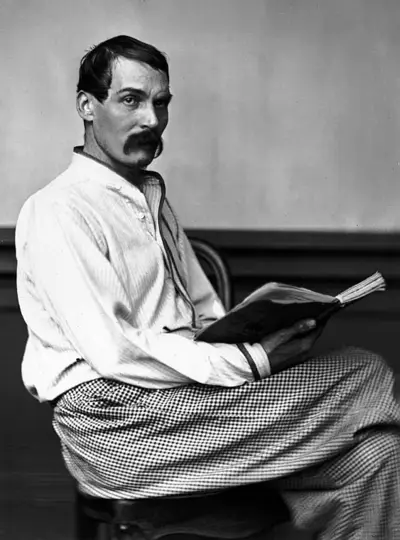
Sir Richard Francis Burton KCMG FRGS was a British explorer, geographer, translator, writer, soldier, orientalist, cartographer, ethnographer, ethnologist, spy, linguist, poet, fencer, Freemason, and diplomat. He was famed for his travels and explorations in Asia, Africa, and the Americas, as well as his extraordinary knowledge of languages and cultures. According to one count, he spoke 29 European, Asian, and African languages.
