Voltaire Quotes
I know I am among civilized men because they are fighting so savagely.
He was ironically observing that most animals and primitive humans, there is fighting among the species but rarely do the fight to the death. One usually gives up, and the other will let him retire from the fight. The fighter who is getting the worst of it, will retire from the battle. However, “civilized” humans will fight for principles and ideas often to the death. “Civilized humans” also think ahead and will strive to exterminate an enemy and kill even after surrender or submission.
Voltaire, 1694-1778, [Francois-Marie Arouet], French Historian & Dramatist, Candide, 1758
Sourced by: Eigen's Political and Historical Quotations


Prior to whites settling in America, various Indian tribes had a long history of fierce fighting for control of Kentucky. The Transylvania Land company negotiated for the “rights” to Kentucky. Dragging Canoe, who opposed the treaty, argued that the land had a bad history and would be very difficult to settle. Poet Theodore O’Hara described Kentuckians as “Sons of the Dark and Bloody Ground” in his poem, The Bivouac of the Dead.


The general was expressing a principle that is believed to this day by many policy makers, military people and civilians: Once a war has begun, one must not stop it until victory has been attained. It is unacceptable to negotiate an end to hostilities unless the enemy has been badly beaten on the battlefield. There is this view that “honor” would be lost and that enemies and even allies will not respect you and think the nation is weak and fearful. So there would always be extensive pressure to keep on fighting and not negotiate until there is a military dominant position.


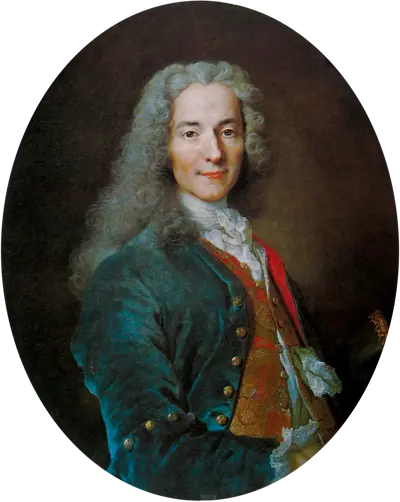
François-Marie Arouet, known by his nom de plume Voltaire (/vɒlˈtɛər, voʊl-/; also US: /vɔːl-/; French: [vɔltɛːʁ]), was a French Enlightenment writer, historian, and philosopher famous for his wit, his criticism of Christianity—especially the Roman Catholic Church—as well as his advocacy of freedom of speech, freedom of religion, and separation of church and state.
