Hjalmar Schacht Quotes
The memory of war weighs undiminished upon the people's minds. That is because deeper than material wounds, moral wounds are smarting, inflicted by the so-called peace treaties. ... Material loss can be made up through renewed labor, but the moral wrong which has been inflicted upon the conquered peoples, in the peace dictates, leaves a burning scar on the people's conscience. ...
This is an important historical quotation because it suggests some of the thinking, irrational though it may have been, that led many post war Germans onto an irrational and self defeating course of action. Emotional factors such as dignity, fairness, and honor can be significant drivers of irrational and self destructive action. Nazi Germany was a classic example. Many leading Germans thought the Treaty of Versailles that was imposed on them at the end of the First World War was too harsh and unfair. Many from the countries victimized by the German military aggression also thought the treaty unfair as it did not treat Germany harsh enough.
Hjalmar Schacht, 1877–1970, President of the German Reichsbank, Nazi Germany Minister of Economics, Quoted in United States Department of State, Nazi Conspiracy and Aggression, 1946
Sourced by: Eigen's Political and Historical Quotations


Ingersoll was considered to be the greatest orator and political thinker of his day, but his overt atheistic views curtailed his elected political career.


Vladimir Lenin


He was convicted for treason for passing secrets to the Germans and sentenced to life imprisonment on Devil’s Island. However, he had been the victim of an anti-Semitic plot to cover up for the real traitor—a Christian. However the ”Dreyfus Affair” brought out the virulent anti-Semitism in France. When the truth was exposed, Dreyfus was pardoned, and reinstated in the military, but 11 years in Devils Island had taken its toll on his heath, and he was retired as a result of his disability.


This speech was officially prepared and read to the six Indian tribes of the Iroquois Nation. The purpose was to persuade the Iroquois Indians to stay neutral (see {583726}) in the coming conflict with England. The Iroquois had traditionally traded peaceably with the colonists and on many occasions the colonists and the Iroquois had fought against the French and other Indians. Unfortunately, a Mohawk chief, Joseph Brant, had traveled to England and been educated there. He, following the conventional wisdom of the day persuaded most of the Iroquois tribes to join the obvious winner—England—and fight on their side. Only the Oneida tribe resisted Brant’s advice, and joined the revolutionists. The result was a civil, fratricidal war of not only white, but also the Iroquois Indians who had been at peace with each other since any could remember. When the colonists won, the Oneida were warmly embraced and participated in New York and other colonial life and activities. The relationship was so good that a little over 200 years later the average earnings of the Indian in New York State exceeded that of the average white man. The other 5 Iroquois tribes however were attacked and driven out of their traditional territories and they fled with Joseph Brant to English Canada where they have not yet fully recovered their important place in the society.


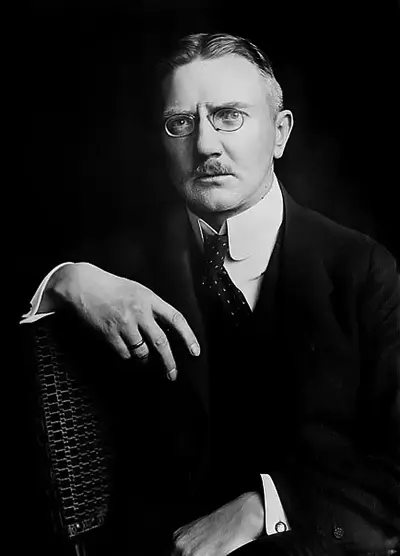
Hjalmar Schacht was a German economist, banker, centre-right politician, and co-founder in 1918 of the German Democratic Party. He served as the Currency Commissioner and President of the Reichsbank under the Weimar Republic. He was a fierce critic of his country's post-World War I reparation obligations.
