Woodrow Wilson Quotes
… right is more precious than peace.
Woodrow Wilson, 1856-1924, 28th President of the United States (Democrat, NJ), Message to Congress asking for a Declaration of War against Germany, April 1917
Sourced by: Eigen's Political and Historical Quotations


Note that the two do NOT ALWAYS coincide. There are those who argue that law should be respected, right or wrong. There are also those who argue that law should be respected, only when it is in the right. Note also that “respect” and “obedience” are two different things. Some people argue that law and the courts and government must have respect. Others that they are only due obedience but not necessarily respect when they are in the wrong. Still others, like Thoreau, that obedience even is not required when the law is wrong. There are those who take this to the degree that obedience to a “wrong” law is wrong and there is a DUTY to disobey a wrong law. However, a more nuanced view does not treat all laws as the same importance. I may think a particular tax is unjust and wrong, but obedience does not necessarily have moral consequences. A law that says that people with a certain religion must not be hired, however, is sufficiently immoral that I am obliged to disobey it.


In the American democracy the tradeoff between military activity and respect for human rights has always been an issue.

The first Jew to run for the Vice Presidency on a major party ticket.


Up Front was a book of cartoons with his two GI characters, Willie and Joe. The quote is from their dialogue. Up Front which won the Pulitzer Prize.


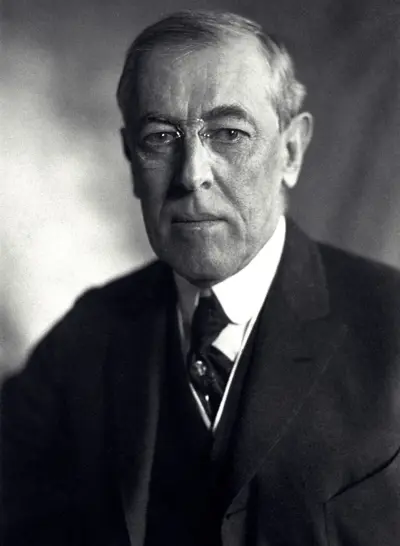
Thomas Woodrow Wilson was an American politician and academic who served as the 28th president of the United States from 1913 to 1921. A member of the Democratic Party, Wilson served as the president of Princeton University and as the 34th governor of New Jersey before winning the 1912 presidential election. As President, Wilson led the United States into World War I in 1917. He was the leading architect of the League of Nations, and his progressive stance on foreign policy came to be known as Wilsonianism. Scholars have generally ranked Wilson in the upper tier of U.S presidents, although he has been criticized for supporting racial segregation and white supremacy.
