Thomas Wentworth, 1st Earl of Strafford Quotes
The little finger of prerogative was heavier than the loins of the law
1st Earl of Strafford
Thomas Wentworth, 1593-1641, Member of English Parliament, Lord Deputy of Ireland, Statement Speaking for King Charles I, Quoted by Charles Sumner, Opinion on the trial of Andrew Johnson, 1868
Sourced by: Eigen's Political and Historical Quotations

The King’s statement was actually given by his chief aide, the Earl of Stafford.


There was a rumor that Napoleon BonaparteII, Emperor of the French, was seriously ill, and when asked what the complaint was, a distinguished foreign guest remarked:


This constitution is erroneously described as the first written constitution in America. It was the first written by whites, but the Iroquois Indians had written a formal constitution over 100 years earlier. This particular clause is fascinating as part of the separation between church and state debate. In this first constitution, legislation was to be the law of the land, not religious law. However, if the legislation were silent on the issue, then religious law was to govern. Thus, neither side in the debate choose to quote it very often, as it only gives them half a victory.


To Mises, “interventionism” is any government action that affects business and businessmen and women. In a large complex society, virtually every government action will benefit some more than others while harming some more than others. There are almost always winners and losers as a result of every government action. Most political philosophers see justice and fairness in benefitting the majority of people most of the time. However Mises and others observe that in a large complex society, in an absolute sense, politics and government can never be fair and just to all.


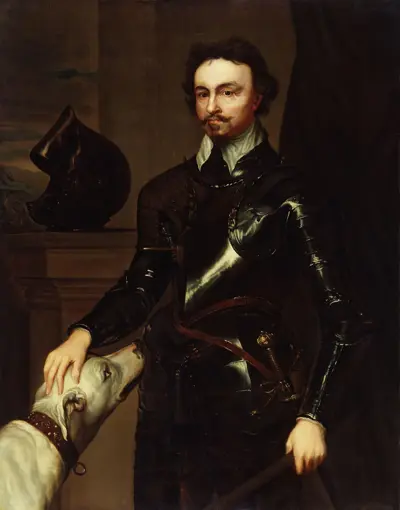
Thomas Wentworth, 1st Earl of Strafford, KG was an English statesman and a major figure in the period leading up to the English Civil War. He served in Parliament and was a supporter of King Charles I. From 1632 to 1640 he was Lord Deputy of Ireland, where he established a strong authoritarian rule. Recalled to England, he became a leading advisor to the King, attempting to strengthen the royal position against Parliament. When Parliament condemned Wentworth to death, Charles reluctantly signed the death warrant and Wentworth was executed.
