Iran Quotes
The investigation of individuals' beliefs is forbidden, and no one may be molested or taken to task simply for holding a certain belief.
Iranian Constitution
Sourced by: Eigen's Political and Historical Quotations


Her sister, Mary, the previous Queen, had over 200 Englishmen burned at the stake for their Protestant beliefs. Elisabeth wanted no part of the government trying to determine or regulate the religious beliefs of Englishmen.


Williams was the first theologian who not only advocated religious toleration but argued that Christianity demanded it and the separation of church and state.

Despite this clear statement, later the Colonial legislature withdrew the franchise from Roman Catholics. See {624149}. Despite this temporary restriction of religious freedom, Rhode Island and Connecticut were far ahead of the other New England colonies in freedom of conscience.


Pen name: Jack Nipps


In one of the historical ironies of the 12th century, a Christian sect preferred the rule of the Muslims than their Christian brethren—on the grounds of religious tolerance. It illustrates the changes that take place over time. By the 21st century, it was the Christians who were thought of as tolerant and the Muslims as the opposite.

There were times and places where the Ottoman Turks forced Islam upon conquered peoples. However, much of the time, they operated with a pragmatic tolerance so that they could govern smoothly. The non-Muslims were always second class citizens however. See {635095} for another example.


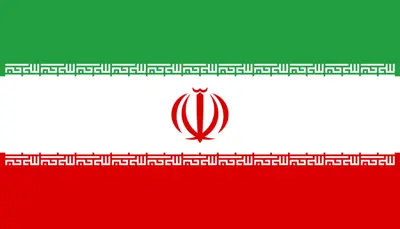
Iran, also called Persia (/ˈpɜːrʒə/) and officially known as the Islamic Republic of Iran (Persian: جمهوری اسلامی ایران Jomhuri-ye Eslāmi-ye Irān (listen)), is a country in Western Asia. With over 81 million inhabitants, Iran is the world's 18th most populous country. Comprising a land area of 1,648,195 km2 (636,372 sq mi), it is the second largest country in the Middle East and the 17th largest in the world. Iran is bordered to the northwest by Armenia and the Republic of Azerbaijan, to the north by the Caspian Sea, to the northeast by Turkmenistan, to the east by Afghanistan and Pakistan, to the south by the Persian Gulf and the Gulf of Oman, and to the west by Turkey and Iraq. The country's central location in Eurasia and Western Asia, and its proximity to the Strait of Hormuz, give it geostrategic importance. Tehran is the country's capital and largest city, as well as its leading economic and cultural center.
