John Leland Quotes
The liberty I contend for is more than toleration. The very idea of toleration is despicable; it supposes that some have a pre-eminence above the rest to grant indulgence; whereas all should be equally free, Jews, Turks, Pagans and Christians. Test Oaths and established creeds should be avoided as the worst of evils.
Pen name: Jack Nipps
John Leland, 1754-1841, Baptist Minister and Author, Short Essays on Government, 1820
Sourced by: Eigen's Political and Historical Quotations

Kennedy was being hurt be fears that as a Catholic, he would be beholden to the Pope and the Catholic Bishops. There were many protestants who believed that the Catholic Church was antithetical to democracy and some who even believed that Catholicism was the religion of Satan. Kennedy decided to confront the issue head on.

Abdul Rahman, Afghan citizen, had converted from Islam to Christianity 16 years before. Conversion from Islam is a capital crime under Sharia Law which was the law of Afghanistan even after the Taliban had been overthrown. He was jailed and threatened with death. Statements like this and others made directly to the government persuaded the Afghan politicians to go against their mullahs who demanded the death penalty as is proscribed by Islamic Law—Sharia. The judges tried to get Rahman to recant and he would not (see {589518}). So they finally decided that he must be mentally insane and therefore could not be tried, and the problem was solved that way.


This book is endorsed by major religious organizations of all faiths as well as National School Boards Association, National Education Association, National PTA, National Association of Secondary School Principals, National Association of Elementary School Principals, American Association of School Administrators and others. It is used as a guideline by most schools systems in the United States.

This quotation is one of the first to make the critical observation that the only time that tolerance of a religion is necessary is when there is an established church and others that deviate from it. If there is no established church, as the Founding Fathers envisioned, there is no preeminent church to do the tolerating. All are equal. In practice, Protestant churches were proportionately dominant in early America and up through the 20th century. So most of the issue of tolerance problems in America were cultural. And there is still a minority of Christians who believe that America should be a Christian country and other religions should be “tolerated.” However, Clinton and most of the founders did not want to see even general Christianity established as the national religion even they it was the majority religion.


Pen name: Jack Nipps

The Soviet state had varied views regarding religion in different times. In the early days of the Russian Revolution, the Russian Orthodox Church was a major supporter of the Csar and serfdom. That caused a certain hostility to the Russian Church. That Church meanwhile had previously been extremely hostile to Jews and Roman Catholics and never recognized Protestant Churches. So Russians as a group were already discriminating against all religion except the Russian Orthodox Church before the Communist Revolution took place. When the Russian Communists were well entrenched in power, they saw the Russian Church as an obstacle to modernization and were hostile to any group that had a loyalty to any force or deity that was not the Soviet State.

By the beginning of the 21st Century, some Republicans had perfected the art of naming legislation completely contrary to its intent and effect in order to make opposition to it more difficult for opponents in the legislature. But nothing they ever did came close to the audacity of naming this legislation, The Toleration Act, as it was about the most intolerant legislation ever passed in America. Exactly what the motivation of the legislative drafters was is not known. One theory is that as a Catholic Colony, perhaps they really thought that they were being tolerant as they would not execute Protestants except Unitarians. In any event is was a low point in American history and was one of the examples that was before the Founding Fathers when they added the First Amendment to the Constitution. See {624142} for the text.


It was drafted by John Adams. Note that there was freedom of religion for Christians and not others. Of all the colonies, Massachusetts had the worst record of religious intolerance with Puritans controlling everything. Rhode Island and Connecticut were created by religious dissenters from Massachusetts. Adams had all he could do to get the Christian sects on an equal footing ratified. The other colonies however, insisted to a total freedom of religion clause which became the First Amendment to the national Constitution. Adams himself was a kind of secular, cultural Christian who did not believe in the divinity of Christ and other Christian doctrine. See {592695} to illustrate this.
This book is endorsed by major religious organizations of all faiths as well as National School Boards Association, National Education Association, National PTA, National Association of Secondary School Principals, National Association of Elementary School Principals, American Association of School Administrators and others. It is used as a guideline by most schools systems in the United States.


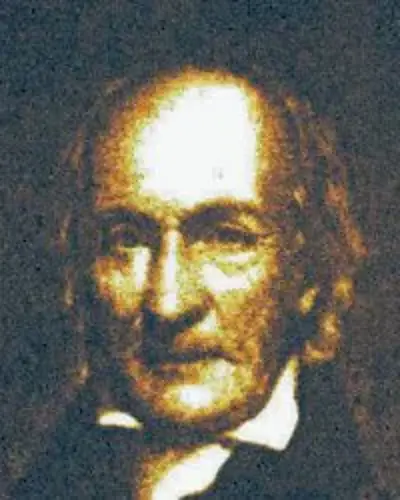
John Leland was an American Baptist minister who preached in Massachusetts and Virginia, as well as an outspoken abolitionist. He was an important figure in the struggle for religious liberty in the United States. Leland also later opposed the rise of missionary societies among Baptists.
