William O. Douglas Quotes
The people, the ultimate governors, must have absolute freedom of, and therefore privacy of, their individual opinions and beliefs regardless of how suspect or strange they may appear to others. Ancillary to that principle is the conclusion that an individual must also have absolute privacy over whatever information he may generate in the course of testing his opinions and beliefs.
William O. Douglas, 1898-1980, U.S. Supreme Court Justice, Chairman, Security & Exchange Commission, Branzburg v. Hayes, 1972
Sourced by: Eigen's Political and Historical Quotations


Snowden, was a contract worker for Booz Allan assigned to the National Security Agency (NSA). He felt that some of the NSA activities were illegal and unethical and tried to complain to NSA officials who rebuffed him. Despite the fact that he had signed an agreement not to do so, he copied many critical, classified documents that exposed much of the NSA activities that the NSA officials had denied existed—including lying under oath to the Senate. He then made many of them public, violating his oath, breaking the law, and opening up an entire area of government spying which most Americans knew nothing about and about which senior government officials had lied under oath to Congress. They of course wanted to prosecute Snowden who had told the truth, while they had lied. For many Americans, this became a moral and ethical conundrum.


He was the Chairman of the Senate Judiciary Committee. The Islamic fundamentalist terrorists are repugnant to us because they have no respect for Civil and Human Rights and would deny us what we value so highly and for which so many Americans have sacrificed. We are little better off if we surrender our civil rights in order to cope with the problem of losing our civil rights to the likes of the Taliban and Al Qaeda.
The Grammar Curmudgeon


Spinoza was one of the most feared intellectuals in human history—feared that is by the established power structures. He is the only known person who was excommunicated by the Catholics, the Jews and the Muslims—all were forbidden to read his works. He was the enemy of authority and advocated personal reason as the guide for men.
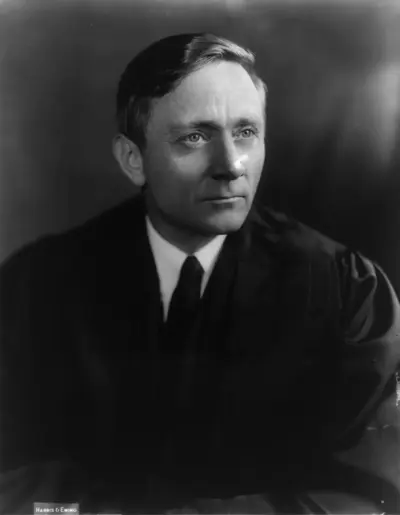
William Orville Douglas was an American jurist and politician who served as an associate justice of the Supreme Court of the United States. Nominated by President Franklin D. Roosevelt, Douglas was confirmed at the age of 40, one of the youngest justices appointed to the court. His term, lasting 36 years and 211 days (1939–75), is the longest in the history of the Supreme Court. In 1975, Time magazine called Douglas "the most doctrinaire and committed civil libertarian ever to sit on the court."
