John Marshall Harlan Quotes
Privacy in one's associations may in many circumstances be indispensable to freedom of association, particularly where a group espouses dissident beliefs.
John Marshall Harlan, 1899-1971, U. S. Supreme Court Justice, NAACP v. Alabama
Sourced by: Eigen's Political and Historical Quotations
_0_thumbnail_47x47.jpg)


He was the Chairman of the Senate Judiciary Committee. The intelligence and law enforcement advocates of reducing privacy rights so that law enforcement can prevent acts of terrorism frame the question as a tradeoff between civil right and safety. However, as Leahy and many others point out, we would not be much safer if we gave up all our ivil rights. Further, hundreds of thousands of American have given their lives so that we would have those civil rights. Without them what are we protecting.


Snowden, was a contract worker for Booz Allan assigned to the National Security Agency (NSA). He felt that some of the NSA activities were illegal and unethical and tried to complain to NSA officials who rebuffed him. Despite the fact that he had signed an agreement not to do so, he copied many critical, classified documents that exposed much of the NSA activities that the NSA officials had denied existed—including lying under oath to the Senate. He then made many of them public, violating his oath, breaking the law, and opening up an entire area of government spying which most Americans knew nothing about and about which senior government officials had lied under oath to Congress. They of course wanted to prosecute Snowden who had told the truth, while they had lied. For many Americans, this became a moral and ethical conundrum.


It is one of the tactics of Putin’s Russia. as it was with the Stalinist Era, to commit dissidents to mental institutions under the twisted logic that no one who was sane could possibly ge against such a beneficent government,


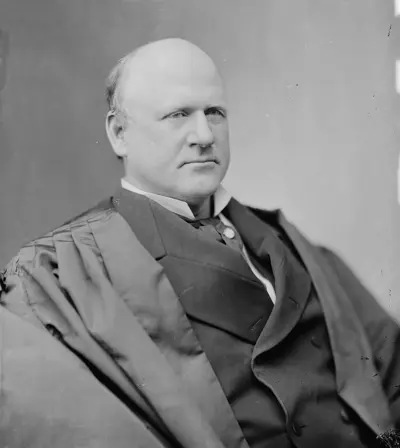
John Marshall Harlan was an American lawyer and politician who served as an associate justice on the U.S. Supreme Court. He is often called "The Great Dissenter" due to his many dissents in cases that restricted civil liberties, including the Civil Rights Cases and Plessy v. Ferguson. Many of Harlan's views expressed in his notable dissents would become the official view of the Supreme Court starting from the 1950s Warren Court and onward. His grandson John Marshall Harlan II was also a Supreme Court justice.
