William Johnson Quotes
... the Indians must think there can be no union in our Councils, when it has been known more than once, that the Six Nations have been invited to a conference by different colonies at the same time. This looks among the Indians, as tho' our Measures were not mutual, and occasions them to be divided in their Councils also, being doubtful of our acting with vigor and unanimity etc. against the French
Unlike lost other Indian Nations, the Iroquois had years before formed a formal federation whereby each of the six tribes governed their own local affairs, but they spoke and acted as one in governing trade matters, security and foreign policy. This was the main reason that they dominated the other Indian nation. Colonial history is replete with the Iroquois leaders recommending such a confederation to the whites—advice that was finally taken.
William Johnson, 1715–1774, Superintendent of Indian Affairs for the Northern Colonies of British America, Major General of the English Forces in North America
Sourced by: Eigen's Political and Historical Quotations

The Iroquois were generally recognized, even by the other tribes and nations, and the most advanced and most powerful of the Native Americans. Their example was critical in shaping the policies and behavior of all the Indians. At the time “Western” Indians referred to those in Pennsylvania, Ohio, Kentucky, Illinois and those West of the Eastern seaboard. West Coast and Plains Indians were not known generally known to the colonists and those nations had no knowledge of the Iroquois. Johnson himself married an Iroquois woman.


The French had launched a sneak attack on the English settlement at Schenectady, NY. The English had not provided enough security to Schenectady and now considered withdrawing from the upstate area. Contrary to the popular conception of all the Indians being invaded by the Whites and fighting it, here these Indians were urging the English to hang on and stay in the area. The Mohawk were one of the tribes of the Iroquois confederation which were very sophisticated, somewhat democratice, and very powerful economically and militarily. To them, the English were good trading partners and unlike the French tended to conform with Iroquis norms, rules and mores. It also illustrated the closeness of the alliance of these Indians with the English against the French in the French & Indian Wars.

This was the first proposal for a united American government. It provided for a “President-General” and a unicameral “Grand Council” with representation proportional to population.

He was referring to the Chickasaw, Creek (Muscogee), and Choctaw Native American Tribes. Historically individual whites including families had little difficulty with most Native Americans so long as they were few. The hostilities against whites generally began when large numbers of whites began to settle on traditional Indian land or hunting grounds and contest the Native Americans for their own land. The entire conflict between Native Americans and whites was in essence a battle for land.


Coping with the French and their Indian allies was a problem for all the American colonies and Franklin was the strongest voice for some kind of union or federation for not only mutual defense, but to facilitate commerce by having some uniform currency and basic laws of trade to promote the mutual economy. The 6 Iroquois tribes had years ago formed the Iroquois nation complete with a formal constitution that maintained tribal identity but also enabled unified action if any were attacked and provided mutual assistance on a number of economic areas. They became the strongest, wealthiest, healthiest and most sophisticated nation of North America before European colonization and unlike many other Indians with a few exceptions–see {21747} for an example–got along very well with the English colonists. Franklin was a great admirer and wanted to use some of their Constitutional provisions in the American Constitution 36 years later, but at the time tried to embarrass many American's into forming a union with language like this quote. Actually, he did not think of them as savages at all, but most Americans who knew little about them did, and Franklin was never above using people's prejudices to get them to buy into one of his political ideas.
The French were at the time much more aggressive traders and the Iroquois Nation had fixed agrarian communities and were very involved in trading. And the French King controlled the military in North America and had ordered the construction of a series of forts to protect their trading interests from the British. However, military affairs in British Colonial America were left to the colonies, all of whom were very parochial and didn't want to raise taxes for much. Benjamin Franklin, one of the Colonial delegates at the conference, had been urging some kind of a federation of the American colonies–{583422} & {35007}. He had used the Iroquois as a model as the 6 tribes had a unified military among other common governmental aspects. However, no colony wanted to give up any of its sovereignty to others or a Federation. Under the prodding of Franklin and the Iroquois, 7 Colonial Delegations agreed to a plan, mostly devised by Franklin�the Albany Plan�for a centralized governmental structure. The Albany Plan was never implemented but it started the process of unification discussion of the Colonies which would stimulate the Articles of Confederation and the Continental Congress.

At the time his Vice President, John C. Calhoun, was expounding a theory of “nullification” by which the states could supersede and nullify federal law in their states. When Jackson finished his toast, it was Calhoun’s turn (See {635896}.) His toast supported the States’ Rights position over the federal government. In those days Presidents and Vice President’s were often political enemies or of opposite parties. The President’s advisors thought that his toast might be misinterpreted. So when they gave the toast to the press as “The Federal Union: It must be preserved.” That was the form in which the press reported the President’s toast and for many years that was the version most quoted even though it was never delivered that way. However Jackson was responsible for both versions.


a Shoshone Indian woman who accompanied Lewis and Clark in exploring the Louisiana Territory
He served as one of Napoleon’s Generals


The American Colonies had the strength of local control, but that also had weaknesses whereby it was difficult to mobilize communities to work together for any purpose including mutual defense. Ironically, the very thing that provided a common weal was the British Government itself and 80 years later, Americans would unite in revolution.

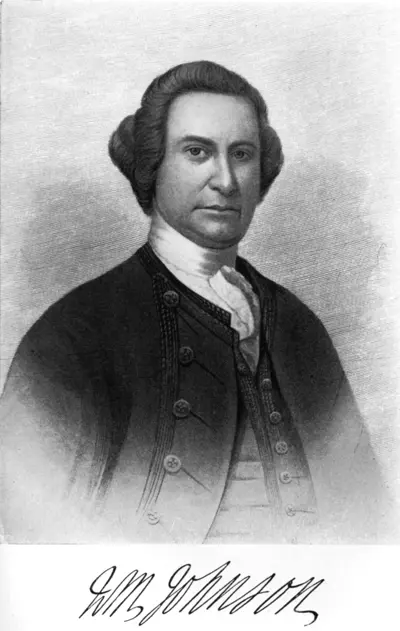
Sir William Johnson, 1st Baronet, was an Irish official of the British Empire. As a young man, Johnson moved to the Province of New York to manage an estate purchased by his uncle, Admiral Peter Warren, which was located amidst the Mohawk, one of the Six Nations of the Iroquois League. Johnson learned the Mohawk language and Iroquois customs, and was appointed the British agent to the Iroquois. Because of his success, he was appointed in 1756 as British Superintendent of Indian Affairs for the northern colonies. Throughout his career as a British official among the Iroquois, Johnson combined personal business with official diplomacy, acquiring tens of thousands of acres of Native land and becoming very wealthy.
