James Glen Quotes
South Carolina is a weak frontier colony, and in case of invasion by the French would be their first object of attack. We have not much to fear, however, while we retain the affection of the Indians around us; but should we forfeit that by any mismanagement on our part, or by the superior address of the French, we are in a miserable situation. The Cherokees alone have several thousand gunmen well acquainted with every inch of the province … their country is the key to Carolina
James Glen, 1701-1777, Colonial Governor of South Carolina, Statement to Virginia Lt. Governor Robert Dinwiddie
Sourced by: Eigen's Political and Historical Quotations

The French were at the time much more aggressive traders and the Iroquois Nation had fixed agrarian communities and were very involved in trading. And the French King controlled the military in North America and had ordered the construction of a series of forts to protect their trading interests from the British. However, military affairs in British Colonial America were left to the colonies, all of whom were very parochial and didn't want to raise taxes for much. Benjamin Franklin, one of the Colonial delegates at the conference, had been urging some kind of a federation of the American colonies–{583422} & {35007}. He had used the Iroquois as a model as the 6 tribes had a unified military among other common governmental aspects. However, no colony wanted to give up any of its sovereignty to others or a Federation. Under the prodding of Franklin and the Iroquois, 7 Colonial Delegations agreed to a plan, mostly devised by Franklin�the Albany Plan�for a centralized governmental structure. The Albany Plan was never implemented but it started the process of unification discussion of the Colonies which would stimulate the Articles of Confederation and the Continental Congress.


The Indian allies of the French scalped some American colonists which for some whites was akin to the modern reaction to terrorist atrocities. The British and Americans then justified the scalping of their Indian allies as simple retaliation. While Indians had scalped before the whites ever came, the whites accelerated the practice. There was an economic element to scalping. The French “paid” their Indian allies in arms, blankets, trinkets and alcohol by the scalp as it was a crude way of “performance measurement.” Not to be outdone, the English adopted the same custom with the French allied Indians as targets. In North Carolina, for example, the “volunteer” rangers were paid the enormous rate of 10 pounds a scalp.

The French had a much different agenda in the new world than the British who wanted to create residential colonies. The French were more interested in trade—not in establishing permanent colonies. The result was that the French were in many ways better trading partners for the Indians than the English. They came without women, intermarried among the Indians and learned the languages; they did not contest for land, and they paid the Indians more for pelts and furs than the English were willing to. At the same time they exacerbated conflicts with the colonists, and encouraged Indian attacks on settlers as that kept competition out. They were not above giving Indians alcohol and encouraging them to rob the furs and/or kill their English competitors. So on two levels, they had to be removed. See the military view of Robert Rogers: {614122}.

See Jefferson’s reaction when he thought that Napoleon would occupy New Orleans: {593067}

It took only 10 days after the First Continental Congress met for religious bigotry to arise. After hundreds of years of Catholic/Protestant strife, each sect looked upon the other, not only as theologically wrong, but dangerous to the liberty of the other. Unfortunately, the organied religions had acted so badly towards other religions, that everyone was justified in fearing the other religions. This quotation illustrates a then typical attitude of many American Protestants that the Catholic Church was a threat to national security. Ironically, in modern times, anti-Catholic bigots use this quotation to demonstrate that the United States was founded as a Christian Protestant nation—not a general Christian nation. A small, vicious anti-Catholic sentiment still exists, usually by a minority of right wing Protestant religious fundamentalists. Protestant England had just repealed the laws making Catholicism illegal, but this was regarded at that time as intolerable for the new America. This was one of the disputes which that the Founding Fathers were faced with later and one of the reasons that they were so absolute in the need for the 1st Amendment.

At the time, the traders were mostly French who traded all kinds of goods and especially alcohol—usually rum—for fur animal pelts. Many of the Indians were partial to the French and French oriented traders who did not covet their land and would provide the Indians with alcohol and guns, lead and powder while English traders sometimes tried to restrict these items. Many tribes of American Indians are genetically very susceptible to alcohol—both in terms of immediate impairment—getting drunk and in developing a dependency on having alcohol—addiction or alcoholism.

The French had launched a sneak attack on the English settlement at Schenectady, NY. The English had not provided enough security to Schenectady and now considered withdrawing from the upstate area. Contrary to the popular conception of all the Indians being invaded by the Whites and fighting it, here these Indians were urging the English to hang on and stay in the area. The Mohawk were one of the tribes of the Iroquois confederation which were very sophisticated, somewhat democratice, and very powerful economically and militarily. To them, the English were good trading partners and unlike the French tended to conform with Iroquis norms, rules and mores. It also illustrated the closeness of the alliance of these Indians with the English against the French in the French & Indian Wars.

The British, with few troops in the West, armed Indians and paid for American scalps.


Response when German Troops were occupying a part of China. See {641706}.

Napoleon was finally stopped by a multinational coalition led by England.

For a similar Ancient Greek version of this notion, See : {632265}.


During the Seminole War, Ross, as a very respected Cherokee Chief and leader, had been asked to persuade some if the Seminole Chief’s to come to a conference to discuss and negotiate a settlement to the conflict. Ross was successful . Seminole Chief Micanopy, twelve other chieftains, and a number of Seminole warriors accompanied the Cherokee deputation to the headquarters of the United States Army at Fort Mellon, where they were to discuss the matter. When they arrived General Thomas Jesup arrested the Seminoles instead of negotiating. Ross, a very educated man who was literate in English, o the Secretary of War. Jesup in retrospect was one of the disgraces in the history of the U. S. Army was admired, not for his fighting or his lack of ethics, but for his management and logistics as the Quartermaster General. For more quotations showing Jesup’s character, see quotations 643611 and 643612.
This was the first contact between the colonists and the French government. The French agent was very non committal and the parties were just feeling each other out. Franklin made it perfectly clear that the colonists would not trade the English King for a French one and become part of the French empire.
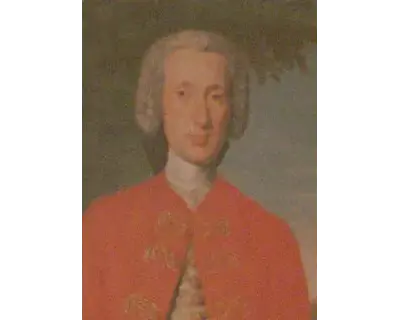
James Glen was a politician in the Province of South Carolina. He was appointed Royal Governor of South Carolina in 1738, but did not arrive in the province until December 17, 1743. He served as governor until June 1, 1756 and was succeeded by William Henry Lyttelton. On June 21, 1761, Glen returned to Europe and died in London. He is buried in Linlithgow, Scotland.
