Algernon Sidney Quotes
Commonly they must use their feet for defense whose only weapon is their tongue.
Algernon Sidney, 1622-1683, British Republican & Member of Parliament, Statement urging armaments
Sourced by: Eigen's Political and Historical Quotations


The French had arrived there first an “claimed” the area with a tiny military contingent under Lieutenant Marchand. However, the British arrived afterward with a much larger military force. London and Paris decided that the French should withdraw in favor of the British. Delcasse had been right. Another case of “might makes right.”

This appears to be the first American utterance of a longstanding doctrine of foreign policy.


FDR was hoping to defeat or at least stop Hitler and Germany by arming England and Russia and thus avoid having American troops committed. However. when the Japanese launched their sneak attack on Pearl Harbor, Hitler immediately declared war on the United States, and our troops were suddenly in a two continent war.


Clay in his speech gave credit for the sentiment to Josiah Quincy


Note that Mormon doctrine requires that peace be offered 3 times before even a righteous war is begun. Under this doctrine, preemptive war would not be permissible, but diplomacy must be tried first and that by offering genuine peace. It is hard to apply this doctrine to the War on Terror, where there is no “other side” to negotiate with and the dispute is existential for democracy and freedom. The parenthetical references are to Mormon Scripture.

This article was published under the name of “A Lover Of Peace” but is generally attributed to Paine. He was publishing in Pennsylvania which had a large Quaker, pacifist population and Paine was urging them to consider being armed.


Response when German Troops were occupying a part of China. See {641706}.

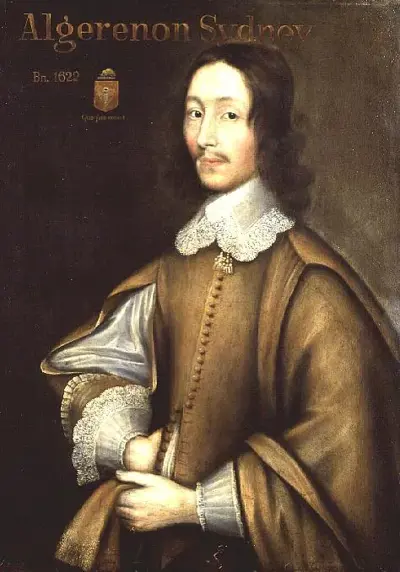
Algernon Sidney or Sydney was an English politician and member of the middle part of the Long Parliament. A republican political theorist, colonel, and commissioner of the trial of King Charles I of England, he opposed the king's execution. Sidney was later charged with plotting against Charles II, in part based on his most famous work, Discourses Concerning Government, which was used by the prosecution as a witness at his trial. He was executed for treason. After his death, Sidney was revered as a "Whig patriot–hero and martyr".
