Thomas Paine Quotes
I am thus far a Quaker, that I would gladly agree with all the world to lay aside the use of arms, and settle matters by negotiation; but unless the whole will, the matter ends, and I take up my musket and thank heaven he has put it in my power.
This article was published under the name of “A Lover Of Peace” but is generally attributed to Paine. He was publishing in Pennsylvania which had a large Quaker, pacifist population and Paine was urging them to consider being armed.
Thomas Paine, 1737-1809, British American Political Philosopher, "Thoughts on Defensive War", Pennsylvania Magazine, July 1775
Sourced by: Eigen's Political and Historical Quotations


Attila the Hun. They were discussing a structure for negotiating Attila’s grievance against Rome.


This appears to be the first American utterance of a longstanding doctrine of foreign policy.

Theodore Roosevelt was the Presidential nominee. Johnson was a leader of some members of Congress some of whom were extreme isolationists and some of whom were Nazi sympathizers and Hitler admirers. When the Japanese attacked Pearl Harbor later that year, Germany, fulfilling its treaty with Japan, declared war on America, Johnson’s group no longer mattered. Before WWII most Republicans were opposed to Defense Spending and accused the Democrats of being war hawks. After WWII, they flip flopped and became more hawkish than the Democrats who they accused of being soft on defense for years thereafter. See {631380} for President Roosevelt’s different view.
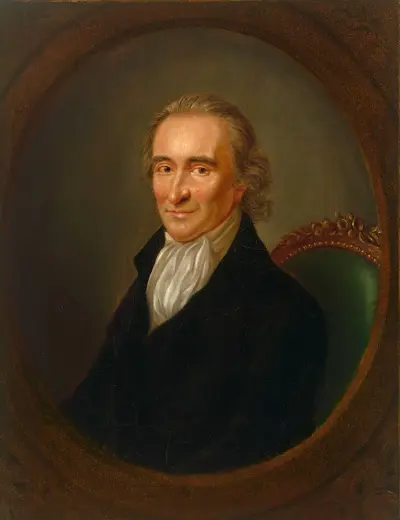
Thomas Paine was an English-born American political activist, philosopher, political theorist, and revolutionary. He authored Common Sense (1776) and The American Crisis (1776–1783), the two most influential pamphlets at the start of the American Revolution, and helped inspire the patriots in 1776 to declare independence from Great Britain. His ideas reflected Enlightenment-era ideals of transnational human rights. Historian Saul K. Padover described him as "a corsetmaker by trade, a journalist by profession, and a propagandist by inclination".
