Henry Ford Quotes
The high wage begins down in the shop. If it is not created there it cannot get into pay envelopes. There will never be a system invented which will do away with the necessity for work.
Ford, Henry, and Samuel Crowther. Today and Tomorrow. Doubleday, Page & Company, 1926.

This used to be a generally accepted principle in America. It took labor to produce wealth. It could be someone else’s labor or even slave labor, but labor produced things or labor enabled us to find minerals like gold or oil. However, in modern capitalism, money itself can produce wealth by investing or yielding interest. Inventions produce wealth as do other ideas. Authors and movie producers produce wealth. Who you know can produce wealth (finder’s fees) as can knowledge.


Germany was in a terrible recession with hyper inflation. The industrialists and the government wanted to roll back the 8-hour work day that had recently been won in many German industries. The logic of the Finance Minister was that no one would invest new capital in Germany, yet Germany needed capital to grow to the level where it could be stable again. Therefore, if the German workers were to work an additional two hours every day without compensation, there was a way to turn that into capital. Of course none of the wealthy Germans would sell off some of their lands, estates, and factories and give that money to the Government and didn’t want to pay more taxes. The burden of recovery would be borne by the German workers. See {590486} .


Remark made during the Cuban missile crisis.


She was running for the Democratic Presidential Nomination.

Mormons in later years found this principle difficult to enforce where there was unemployment and workers were idle through no fault of their own. The local Mormon churches were very active in encouraging wealthier Mormons to hire those who were unemployed.
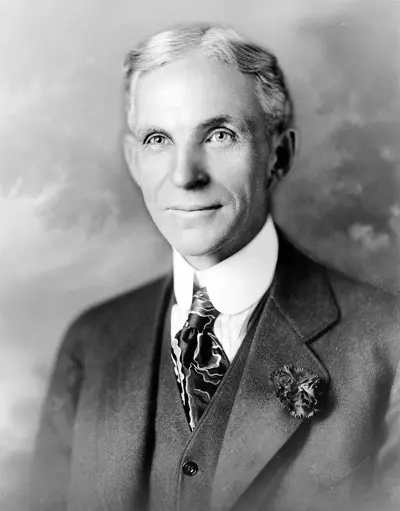
Henry Ford was an American industrialist, business magnate, anti-Semite, and founder of the Ford Motor Company and chief developer of the assembly line technique of mass production. By creating the first automobile that middle-class Americans could afford, he converted the automobile from an expensive curiosity into an accessible conveyance that profoundly impacted the landscape of the 20th century.
