Hugo Stinnes Quotes
The German people will have to work two extra hours per day for the next 10 or 15 years...we must have the courage to say to the people: ‘for the present and for some time to come you will have to work overtime without overtime payment
Germany was in a terrible recession with hyper inflation. The industrialists and the government wanted to roll back the 8-hour work day that had recently been won in many German industries. The logic of the Finance Minister was that no one would invest new capital in Germany, yet Germany needed capital to grow to the level where it could be stable again. Therefore, if the German workers were to work an additional two hours every day without compensation, there was a way to turn that into capital. Of course none of the wealthy Germans would sell off some of their lands, estates, and factories and give that money to the Government and didn’t want to pay more taxes. The burden of recovery would be borne by the German workers. See {590486} .
Hugo Stinnes, German Industrialist, Statement, October 1922
Sourced by: Eigen's Political and Historical Quotations

Germany was in a terrible recession with hyper inflation. The industrialists and the government wanted to roll back the 8-hour work day that had recently been won in many German industries. The logic of the Finance Minister was that no one would invest new capital in Germany, yet Germany needed capital to grow to the level where it could be stable again. Therefore, if the German workers were to work an additional two hours every day without compensation, there was a way to turn that into capital. Of course none of the wealthy Germans would sell off some of their lands, estates, and factories and give that money to the Government and didn’t want to pay more taxes. The burden of recovery would be borne by the German workers. See {590485}.


Jefferson was one of the first political and economic thinkers to express concern over the “wage slave” concept of the industrial revolution. This was one of the major reasons that he was not in consonance with Alexander Hamilton in his economic vision for America. While we followed the Hamilton direction, there are still issues of maintaining freedom and independence for an employee in modern nations and economies.

At the time, the NYC subway was operated by a private companies. Quill worked for the largest, the Interboro Rapid Transit Company. Quill organized the workers and forced major changes in the system.

See {616053}. The strike was broken by jailing one of the main leaders.


While it was true that wages did not increase beyond inflation, the enormous increase in productivity—about a doubling—was not only due to the workers but was also due to the capital investment that the companies made in computers, robots, job restructuring, advanced training, and other management initiatives. Historically, when there are substantial productivity increases, the benefit is shared between the workers and the company as both were necessary to produce the increase in productivity. But since 1980, the workers have not obtained any significant share of the productivity increase.


The factory workers in Lynn, Massachusetts started their own newspaper: This was published four years before Marx and Engles published the Communist Manifesto

Labor leader Samuel Gompers used this statement to publically praise the passage of the Clayton Anti-Trust Act.


One of his biggest opponents in this effort was Chancellor Otto von Bismarck-Schoenhausen, 1815-1898.

She was running for the Democratic Presidential Nomination.


Fitzhugh was a Southern iconoclast whose view of Northern labor was much like that of Karl Marx but who was an enthusiastic supporter of slavery.


In his economic view, managers, accountants, attorneys, owners, shareholders, landlords, were all supported by the workers who have to support themselves and all the others.
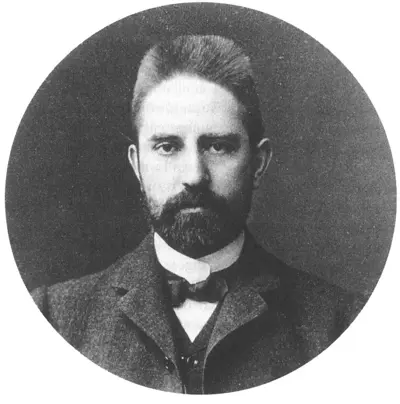
- Born: February 12, 1870
- Died: April 10, 1924
- Nationality: German
- Profession: Industrialist
