Feargus O'Connor Quotes
We believe this is a most ill-judged and suicidal act ... from which we should emerge only through blood and fire or chains and slavery more dire than any we have yet known. There are men earning 15/-, 20/-, 25/- and 30/- a week. I ask, will those men be likely, in a body, to keep the Sacred Holiday? I say not; and, if not, who will be sacrificed? The answer is easy. The most determined, resolute and oppressed.
See {616053}. The strike was broken by jailing one of the main leaders.
Feargus O'Connor, 1794-1855, Irish Member of the British Parliament, Publisher & Chartist leader, Speech arguing against a Chartist proposed 6-week general, 1840
Sourced by: Eigen's Political and Historical Quotations

In 1840 Benbow traveled the countryside promoting his one month general strike. He was arrested and imprisoned a few days before the strike was scheduled to begin. This did intimidate all the other strike leaders and the strike was called off. Benbow died in prison the following year.


Jefferson was one of the first political and economic thinkers to express concern over the “wage slave” concept of the industrial revolution. This was one of the major reasons that he was not in consonance with Alexander Hamilton in his economic vision for America. While we followed the Hamilton direction, there are still issues of maintaining freedom and independence for an employee in modern nations and economies.

Sinclair had written an expose of the meat packing industry – the Jungle – which used as its setting the Armour meat packing factory. It changed the way the public thought about the industry, the role of government and regulation. President Roosevelt took up the reform role, and got Congress to Regulate the quality and cleanliness of the meat packing industry. Sinclair, however not only wanted that reform, but also wanted the labor wages and conditions reformed. He referred to the Armour plant as the fortress.


This fascinating quotation is very frequently quoted out of context. For example even in modern times some Southern slavery apologists quote this passage stating that Adams saw no moral difference between slavery and employment of the lower classes. And anti-capitalists have claimed that this was an attack on capitalism as no better than slavery for many workers. Neither is true. The debate was on the head taxes that states should pay to the central government. Southerners were claiming that they should not have to pay per person taxes on slaves. Adams position was that they should pay in that there is no practical difference in the work and working conditions very often. If slaves should be exempted from the head tax, so should the poor, lower class workers like the fisherman in New England. He always maintained at huge moral difference between a poor free worker and a slave even thought their working conditions might be similar.


At the time, it did seem impossible that labor and capital would ever have harmonious relations. But the notion that slavery would solve the problem is as preposterous as anything ever entered into the American political dialogue. But there were many in the South, and some in the North, who actually believed it. Even 150 years later, while labor and capital relations were much better than pre Civil War, they still could not be described as “harmonious” or “friendly”.


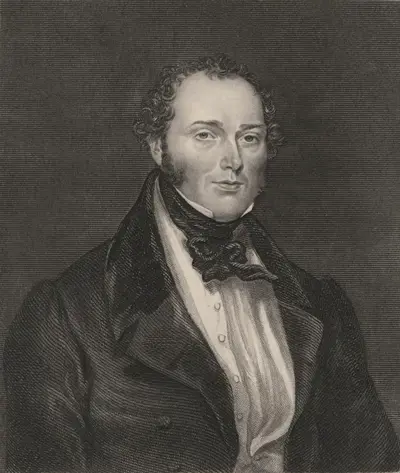
- Born: July 18, 1796
- Died: August 30, 1855
- Nationality: Irish
- Profession:
Feargus Edward O'Connor was an Irish Chartist leader and advocate of the Land Plan, which sought to provide smallholdings for the labouring classes. A highly charismatic figure, O'Connor was admired for his energy and oratory, but was criticised for alleged egotism.
