George Washington Quotes
The greatest estates we have in this colony were made … by taking up and purchasing at very low rates the rich back lands which were thought nothing of in those days, but are now the most valuable lands we possess.
George Washington, 1732-1799, 1st President of the United States (VA), Quoted in Kevin Phillips, 1775: A Good Year For Revolution, 2012
Sourced by: Eigen's Political and Historical Quotations

Many of the delegates to the Constitutional Convention of 1787 had invested in land that had formerly belonged to the Iroquois Indians who had sided with the British in the Revolution and been driven up to Canada. They had paid very little and wanted to sell it at large profits. However, there was little gold and silver left in the colonies after the war and there was great reluctance in the rest of the world to lend gold and silver backed money to a new country that did not have a rule of law and courts to collect debts. For example, Madison and Monroe had formed a partnership and bought former Iroquois land near Rome, New York. There was idealism to be sure but there was also self-interest functioning in the secret Constitutional Convention.


His expedition to Kentucky was illegal as it was against British law to expand to the West. Soon, hundreds of thousands of Americans would follow Boone and his men.


While Turgot was right about so much, this was one of his big errors—the assumption that land was fundamental to and necessary for, wealth. In many countries it is still true, but of the recent billionaires like Warren Buffet, Bill Gates, Carlos Slim and most others, they own very little land. In the United States and Canada, there are large tracts of land that few or no one will buy and a cast majority of people do not make their living from land.

Note that although the industrial revolution was beginning, the value of factories, inventory, machines, and raw materials were not yet recognized by some of the leading intellectuals of America. The perspective was totally agricultural.


Because of the classic historical anti-Semitism and discrimination, Jews were barred from land ownership and as a result few were farmers or had agricultural experience in their families. They were tradesmen, artisans, professionals in Europe. So amongst Jews and non Jews alike the notion of Jews settling the land of Palestine and farming it or trapping, the way the Boers had in South Africa or the French in Canada, was not a very credible image. The Zionists, realizing this potential weakness, placed strong emphasis on agriculture, developed the agricultural kibbutz concept and encouraged Jews to become farmers. The effort was so successful that almost all the leading early Zionist immigrants to Palestine became farmers. When independence came to Israel, the Jewish agriculture was more productive than most of that in Europe and almost on a par with small farms in the United States. The Israelis were known for “making the desert bloom.
While the economics of land is described accurately, immigrants from most of the world would never in their home country ever be able to earn enough in a few years to acquire that much land. So the prospect of land ownership was a fundamental selling point and was a major spur to immigration to America where land was and is plentiful.

Use included renting it. What he opposed was simply holding land when whites were driving Indians off their lands because all the unused land outside of the reservation was owned by someone and the asking price was very high. Ingersoll was considered to be the greatest orator and political thinker of his day, but his overt atheistic views curtailed his elected political career.


The emergency was what was called the “Dust Bow” which was a period of severe dust storms causing major ecological and agricultural damage to American and Canadian prairie lands in the 1930s. Over 350,000 people left the Great Plains. The phenomenon was caused by severe drought combined with a failure to apply dry land farming methods to prevent wind erosion. What makes this quotation important is that it illustrates a remarkable practice of Mrs. Roosevelt that no other first lady as every done. Here the First Lady of a sitting President was overtly whipping up public opinion to complain that the government, led by her husband, was doing nothing to cope with a national emergency. This was very common and Mrs. Roosevelt was way out ahead of the President and his administration on most issues of the day. The President seemed to like the idea and it may have been one of the great public strategies of a Presidency. The First Lady would publicly advocate major reforms. The President could then observe the public reaction, judge the newspaper and pundit pronouncements, see how different special interests reacted. Then he could decide to embrace the reform or ignore it saying that it was just the opinion of his very independent wife. FDR had a very strong ego and had no problem with his wife publicly criticizing him.

“Dear” was an adjective that was used (and still is) in England. It means “expensive”. Like so many activities today, this has existed throughout time. Here, in many of the very early American Colonies (in this case, Virginia), where a few ended up with most of the land while many who fought and bled for it did not.


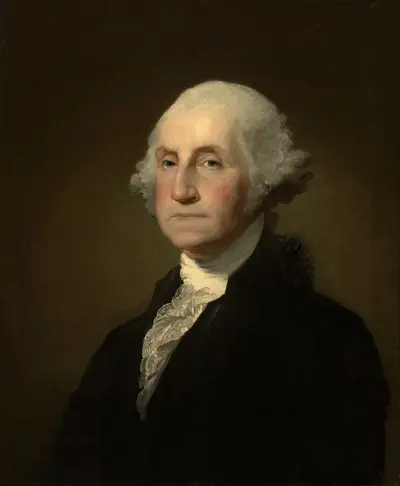
George Washington was the first President of the United States (1789-97), the Commander-in-Chief of the Continental Army during the American Revolutionary War, and one of the Founding Fathers of the United States. He presided over the convention that drafted the current United States Constitution and during his lifetime was called the "father of his country".
