Arthur Young Quotes
The magic of property turns sand to gold
Arthur Young, 1741-1820, English Writer and Contemporary Historian, Aphorism, Works by Arthur Young
Sourced by: Eigen's Political and Historical Quotations

Many of the delegates to the Constitutional Convention of 1787 had invested in land that had formerly belonged to the Iroquois Indians who had sided with the British in the Revolution and been driven up to Canada. They had paid very little and wanted to sell it at large profits. However, there was little gold and silver left in the colonies after the war and there was great reluctance in the rest of the world to lend gold and silver backed money to a new country that did not have a rule of law and courts to collect debts. For example, Madison and Monroe had formed a partnership and bought former Iroquois land near Rome, New York. There was idealism to be sure but there was also self-interest functioning in the secret Constitutional Convention.


While generally true, Mises here again exaggerates his “proof” by selectively ignoring or being ignorant of counter-examples. The Roman Catholic Church is a classic counter-example where priests, monks, and others owned nothing as individuals, but produced some great science (eg Gregor Mendel), art (the illuminated texts of the middle ages), literature (St Thomas Aquinas, etc). The best counter example that was just evident in the last decade of Misis’ life is Communist Russia. Russian science was better than Fance and Germany and second only to the United States. The Russian ballet and orchestras were second to none. Great literature came out of the Soviet Union and the best of it complained about and attacked the Soviet system of the times. In general, Mises principle tended to be correct throughout history but not always as he dogmatically stated.
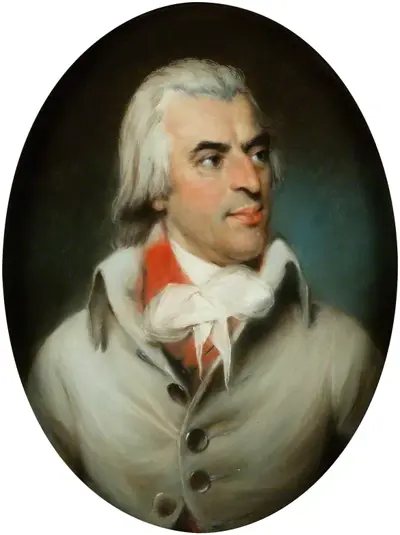
Arthur Young was an English writer on agriculture, economics and social statistics. Not himself successful as a farmer, he built on connections and activities as a publicist a substantial reputation as an expert on agricultural improvement. After the French Revolution of 1789, his views on its politics carried weight as an informed observer, and he became an important opponent of British reformers. Young is considered a major English writer on agriculture, although he is best known as a social and political observer. Also read widely were his Tour in Ireland (1780) and Travels in France (1792).
