Charleston Courier Quotes
The gallows and the stake await the Abolitionists who shall dare to appear in person among us
The “stake” refers to burning at the stake, one of the methods of murder used in the South to intimidate Negroes and whites who might hold anti-slavery sentiments.
Charleston Courier, ~1852
Sourced by: Eigen's Political and Historical Quotations


The point about the negroes who were born into American slavery being less aggressive than those captured and transported to America is often overlooked. Slavery not only was cruel, moral, and inhuman in its own right, but also took its toll over generations as a result of the psychological effects of the terror of slavery. Despite these, it is amazing how resiliant the American Blacks were under those circumstances. in some cases one or two saves escaped after committing a violent act as they had little to lose for trying as they wold be killed if caught. A few of these escaped to the North and others reached Southern Cities like Charleston where there was a small free black community in which they could be absorbed.


His prediction would come true 72 years later. He was a slave trader and a strong supporter of the institution. See {624060}. However unlike most slave supporting Southerners, he came from one of the richest families of New England. His own brother Moses Brown was an ardent abolitionist and John was able to see the arguments and forces lined up against slavery. He saw that abolitionists as the trouble makers because they were trying to change the status quo. Having much experience with Southerners and selling them many slaves, he realized early how the South was totally dependent on slavery for its economic and social way of life. Few Americans had that broad a perspective.
The Reference to St. Domingo refers to the slave rebellion in Haiti, the first major, and successful slave revolt in the Western Hemisphere. The revolution was characterized by the revenge taken against the former slave masters. Thomas Jefferson, then the President, refused to recognize the new government and actually boycotted it. He and most Americans at the time were fearful that a slave revolt in the U. S. would produce revenge attacks against former masters, and indeed the national government supported the slave owners in subjugating all attempted armed rebellion. This reached its zenith in the Federal troops putting down the John Brown attempted revolt at Harpers Ferry. Instead of the bloodshed of a slave revolt, America experienced the bloodshed of a Civil War.

This quotation, one of William Lloyd Garrison’s favorite quotations illustrating the intellectual degeneration brought about by slavery. In historical perspective, Lumpkin, later, was one of the three justices of the Georgia Supreme Court, and with this kind of intellectual and legal corruption the Courts of the South were major forces protecting the institution of slavery.

In 1831 a slave preacher, Nat Turner, led a rebellion in North Carolina killing over 50 whites. Even though Turner and the rebels were captured and executed, whites throughout the South, took vengeance on any slaves they could find. This description was of a North Carolina community.


Some had organized and led lynchings; others participated, and others stood by without speaking out.


This statement was made long after slavery had been abolished and Jim Crow was on the rise in the South.

Phelps was a Copperhead Democrat who was a virulent racist, an enemy of Lincoln and supported McClellan against Lincoln in 1864. His extreme disrespect for the President and his racism was not appreciated in Vermont, and Phelps not only failed to help McClellan but destroyed his own credibility in his home state of Vermont. Phelps had been practicing law in New York City where there was a large Copperhead, racist and anti-Lincoln part of the population there.


Under the Mexican law which governed Texas at the time, slavery had been much curtailed. Austin and many others wished to expand it “to permit families to bring the necessary and indispensable house servants and laborers”
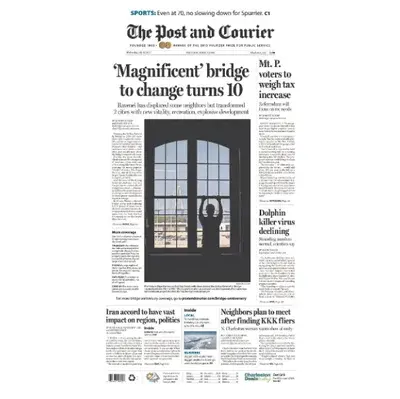
The Post and Courier is the main daily newspaper in Charleston, South Carolina. It traces its ancestry to three newspapers, the Charleston Courier, founded in 1803, the Charleston Daily News, founded 1865, and The Evening Post, founded 1894. Through the Courier, it brands itself as the oldest daily newspaper in the South and one of the oldest continuously operating newspapers in the United States. It is the flagship newspaper of Evening Post Industries, which in turn is owned by the Manigault family of Charleston, descendants of Peter Manigault.
