Edward Everett Quotes
The evil, Sir, is enormous; the inevitable suffering incalculable. Do not stain the fair fame of the country. . . . Nations of dependent Indians, against their will, under color of law, are driven from their homes into the wilderness. You cannot explain it; you cannot reason it away. . . . Our friends will view this measure with sorrow, and our enemies alone with joy. And we ourselves, Sir, when the interests and passions of the day are past, shall look back upon it, I fear, with self-reproach, and a regret as bitter as unavailing.
Everett, Edward. Speech of Mr. Everett, of Massachusetts, on the Bill for Removing the Indians from the East to the West Side of the Mississippi. Gales & Seaton, 1830, p. 32.


First Published American Indian Author. His last public speech. He was referring to a horrible massacre of Christian Indians and the polarizing effect that such conflicts had. Whosoever publicly castigated a massacre of whites or Indians would be met by accusations of condoning the massacres of the other side and ignoring the inevitable and natural seeking of retaliation for future protection and revenge.

This comprehensive report of 457 pages was written, printed and distributed at her expense prior to her Federal appointment.


For his seditious activities he was sentenced to penal servitude for life. He escaped and came to America where he entered politics

The Belgian soldiers attempted to terrorize and intimidate the natives into working on the rubber plantations. The practice of cutting off hands thus leaving the victim to intimidate others which was so prevalent in Sierra Leone and other parts of Africa in 2000 was also practiced by the Whites at the turn of the last century.

The customary technique of the European Powers was to “sign treaties” with the kings of various African territories and provide them with “presents” (bribes). Often the European arms and the active assistance of European soldiers maintained the autocratic power of these leaders. In this case, the British had moved so fast that the “presents” were in a caravan that had not yet arrived.


On July 7, 1898 the United States annexed Hawaii through a transparent aggression posing as a revolution.


Japan, then a militaristic power in the East had occupied and controlled Manchuria after the Russo-Japanese War. The League of Nations voted that Manchuria should be placed under international control until elections and independence can be arranged. (See {627074}.) The Japanese then had a rapidly growing population and Japan felt that the Japanese Islands were not sufficient to produce the raw materials, oil and agriculture needed to sustain a larger Japanese population. Therefore, the Japanese argued that they were entitled to grow and expand to nearby territories to provide for their nation’s needs. When the league of nations rejected the Japanese position, Japan walked out of the League of Nations. Japan would occupy part of China and Korea all leading to WWII.


See {633119} for the basic provision of the Dawes Act.

In March of 1814 Jackson led a force to track down the Red Sticks. When they did so at Horseshoe Bend. Jackson made a frontal assault on the Red Stick Breastworks which might have gone badly had not a cotangent of Cherokee Indians—also concerned about the Red Sticks attack on their settlements, assaulted the Red Sticks from the rear. The Red Sticks, caught between the two uncoordinated attackers, lost over 900 men and the battle which then decided the war. In this Battle, Junaluska, a Cherokee, saved Jackson’s life. Years later he would not differentiate between the different Indian peoples and contrary to a Supreme Court order, forced the Cherokee from their settled farms and ranches and moved them to the Oklahoma Territory.
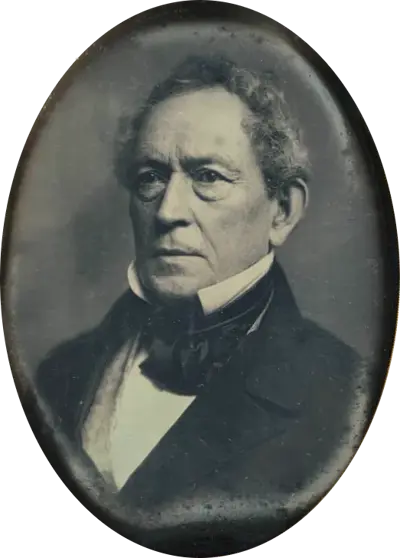
Edward Everett was an American politician, pastor, educator, diplomat, and orator from Massachusetts. Everett, as a Whig, served as U.S. Representative, U.S. Senator, the 15th Governor of Massachusetts, Minister to Great Britain, and United States Secretary of State. He also taught at Harvard University and served as its president.
