Orson Pratt Quotes
The doctrine of celestial marriage or marriage for all eternity is believed in and practiced by the Saints in Utah territory and will be clearly explained. The views of the Saints, in regard to the ancient patriarchal order of matrimony or the plurality of wives as developed in a revelation given through Joseph Smith the Seer, will be fully published … in the very first number. Also, the celestial origin, pre-existence of spirits and so on. It is hoped the president-elect, honorable members of Congress, the heads of the various departments of national government, the high-minded governors and legislative assemblies of the several states and territories, the ministers of every religious denomination, and all inhabitants of the great republic will patronize this periodical.
While Pratt thought that his publication would explain Mormonism to the officials of the nation and reduce misunderstandings, the result was the opposite. Many Washington Government officials had heard “rumors” of Mormon polygamy. However, given their own perspective, most did not believe that any civilized people would so engage. But when they saw Pratt’s written documents like this, there was an official admission in writing of what was seen as a monstrous evil. Pratt himself had 7 wives and 45 children—shocking for most non Mormons of the time.
Orson Pratt,1811-1881, Original member of the 12 Apostles of the Mormon Church, Advertising Prospectus to Washington DC officials for The Seer, his periodical that explained Mormon philosophy, doctrine and theology, December 21, 1852
Sourced by: Eigen's Political and Historical Quotations


“Celestial Marriage” is the term then used be Mormons to describe plural marriage.

The Mormons wanted Utah to be a United States territory or a state with an extreme state’s rights mentality whereby their religious doctrine in the Book of Mormon could be state law and at the time the Constitution had not yet been amended to require the state governments to adhere to the Bill of Rights or other Federal laws. In effect they wanted a democratic type of theocracy. See {619869}. The Mormons would not agree that Federal law should govern their community or people, and war with the Federal government was imminent. In an ironic twist, Johnson, a Texan, rebelled against the nation himself several years later when he became a Confederate General. He was the highest ranking Confederate Officer killed in Battle—at Shiloh.
Von Wackerbarth was one of the many Mormon haters of his day. His quotations have value not for the accuracy of the facts which are scant, but to indicate what much of public opinion regarding Mormons was in that day.
Von Wackerbarth was one of the many Mormon haters of his day. His quotations have value not for the accuracy of the facts which are scant, but to indicate what much of public opinion regarding Mormons was in that day.


The Mormon Church at that time allowed plural marriage. Men could have many wives. The Mormons—especially those who had moved to Utah—had organized many civic functions and performed much of the role that local and State governments did elsewhere in the country. The discrimination that Mormons faced in much of the nation was extreme including lynching and other physical attacks. So Mormons banded together in communities and their church became their local government. This together with the plural marriage offended many other Americans. The wall of separation of church and state was collapsing on many fronts with the Mormon Church assuming many governmental functions in Mormon areas and the Federal, State and local governments interfering with the personal and religious activities of the Mormons. This is one of the few occasions in American history where a President publicly criticized a religion in an official function. It took time and patience, but the issues were finally resolved, and discrimination against Mormons is rare, unusual and condemned by all levels of government and most Americans.

The 100,000 Mormons in the Utah Territory rebelled at the hostile Federal officials coming into Utah to run things without the consent of the citizens of the territory. It was a cry for the territorial version of States’ Rights.


The use of “despotic” did not imply cruelty or even poor management of the society. The term was used to indicate that Brigham Young, the then Mormon Leader, had the powers and authority of a dictator. At the time most Americans in the East knew little about the Mormons. Ludlow was one of the early observers of Mormon society in Utah who wrote about the Mormons in popular—albeit intellectual—magazines. Ludlow regarded Mormonism as it was then practiced as incompatible with, and dangerous for, America, not because of the plural marriage, but the conflicts with the concepts of democracy and self-government. The authority that Brigham Young and the church then exercised over civil life was what distressed him and many other Americans.
The major issue was whether Congress and the Federal Government could make laws and regulate the communities of people who had settled in the new territories. The argument that Young made was that unless a power was specifically enumerated in the Constitution as being granted to the Federal Government it was not. Most Constitutional scholars believe that there were powers implied by the enumerated powers such as the right for the Federal Government to regulate child labor or the safety of nuclear power plants which of course were never mentioned in the Constitution. At the same time anti Mormon sentiment led many to extend Federal Regulation to Mormons that had not been extended to other people/ Plural marriage was one of those major value issues. The Mormons were very innovative in setting up institutions like buying cooperatives and systems for medical care and welfare, and many of these threatened the then established economic principles of many men of power and wealth. See {614870} for John Taylor’s similar view.
Congress had passed the Edmunds Act prohibiting plural marriage. Taylor, who himself had 7 wives and 35 children, went “underground” and secretly operated the church from exile.
The major issue was whether Congress and the Federal Government could make laws and regulate the communities of people who had settled in the new territories. The argument that Young made was that unless a power was specifically enumerated in the Constitution as being granted to the Federal Government it was not. Most Constitutional scholars believe that there were powers implied by the enumerated powers such as the right for the Federal Government to regulate child labor or the safety of nuclear power plants which of course were never mentioned in the Constitution. At the same time anti Mormon sentiment led many to extend Federal Regulation to Mormons that had not been extended to other people. Plural marriage was one of those major value issues. The Mormons were very innovative in setting up institutions like buying cooperatives and systems for medical care and welfare, and many of these threatened the then established economic principles of many men of power and wealth. See {614881} for Brigham Young’s similar view.


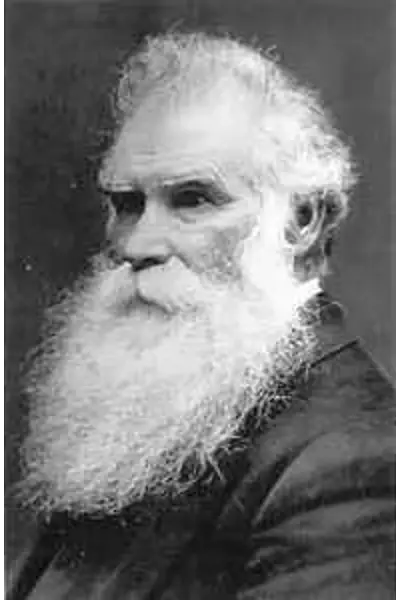
Orson Pratt Sr. was an American mathematician and religious leader who was an original member of the Quorum of the Twelve Apostles of the Church of Jesus Christ of Latter-day Saints. He became a member of the Quorum of the Twelve of The Church of Jesus Christ of Latter-day Saints (LDS Church) and was a leading Mormon theologian and writer until his death.
