Bernard DeVoto Quotes
Mormonism is the only large-scale social experiment in American history that has lasted a hundred years
Bernard Devoto, 1897–1955, Historian, Forays and Rebuttals, 1936
Sourced by: Eigen's Political and Historical Quotations

Von Wackerbarth was one of the many Mormon haters of his day. His quotations have value not for the accuracy of the facts which are scant, but to indicate what much of public opinion regarding Mormons was in that day.


At the beginning of the 21st century there were substantial demographic changes in America which eroded the majority historically held in America by White Christians. A smaller proportion of the American population were identifying with any religion. At the same time that Blacks and Hispanics were a larger proportion of new immigrants than were whites. And those minority groups both had a fertility rate that was substantially grater than that of whites. The result was that in the early 21st century the white Christians were losing their majority status in America.


The Mormons wanted Utah to be a United States territory or a state with an extreme state’s rights mentality whereby their religious doctrine in the Book of Mormon could be state law and at the time the Constitution had not yet been amended to require the state governments to adhere to the Bill of Rights or other Federal laws. In effect they wanted a democratic type of theocracy. See {619869}. The Mormons would not agree that Federal law should govern their community or people, and war with the Federal government was imminent. In an ironic twist, Johnson, a Texan, rebelled against the nation himself several years later when he became a Confederate General. He was the highest ranking Confederate Officer killed in Battle—at Shiloh.


In China, the religious activities of the Missionaries never really lead to the many troubles between the missionaries and the Chinese. It was their activities in the non-religious arenas articulated here by Denby.
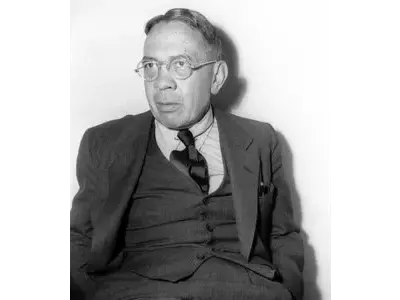
Bernard Augustine DeVoto (1897–1955), American historian, essayist, columnist, teacher, editor, and reviewer, was a lifelong champion of American Public lands and the conservation of public resources as well as an outspoken defender of civil liberties. He was the author of a series of Pulitzer-Prize-winning popular histories of the American West and for many years wrote The Easy Chair, an influential column in Harper's Magazine. DeVoto also wrote several well-regarded novels and during the 1950s served as a speech-writer for Adlai Stevenson. His friend and biographer, Wallace Stegner described Devoto as "flawed, brilliant, provocative, outrageous, ... often wrong, often spectacularly right, always stimulating, sometimes infuriating, and never, never dull."
