Charles William Eliot Quotes
The destructiveness of war waged on the scale and with the intensity which conscript armies, the new means of transportation and communication, the new artillery, the aeroplanes, the high explosives, and the continuity of the fighting on battle fronts of unexampled length, by night as well as by day, and in stormy and wintry as well as moderate weather, make possible, has proved to be beyond all power of computation, and could not have been imagined in advance. Never before has there been any approach to the vast killing and crippling of men, the destruction of all sorts of man's structures—buildings, bridges, viaducts, vessels, and docks—and the physical ruin of countless women and children.
The nature of war itself had changed radically as a result of technology and concepts of total war. Such a dramatic increase in the destructive potential of war then occurred with each major war since and what alarmed Eliot at the time paled to insignificance in the next century.
Charles W. Eliot, 1834-1926, President, Harvard University, Letter to the Editor of New York Times, March 9, 1915
Sourced by: Eigen's Political and Historical Quotations


He was writing about the impending First World War.
One of the most murderous struggles in history was when Turkey was fighting Armenia. The peoples had, and still do have, a great hatred towards each other. The Turks had a large ethnic Armenian population and the Turkish government decided to “relocate” them. In the process many Armenians were brutally murdered, The Armenians however also butchered Turks whenever they could. The events were so brutal, that neither Turkey or Armenia teach about their own atrocities in their schools, but tell their students of the other’s atrocities. Historial denial governs this conflict and its war crimes.


At Potsdam the Allies had called for the unconditional surrender of the Japanese and reiterated what had been allied policy that the surrender must be unconditional. Even after the Hiroshima bombing, the Japanese military cabinet voted not to surrender. After the second atomic bomb, the Emperor decided to surrender, but even then there was an attempted military coup to prevent that. Fortunately, the coup failed. We did not have any more atomic bombs immediately ready and it would have taken months to construct more.

He was then a young Lieutenant.

The Germans did not believe the British would send land troops. See {642105}.


Bryan participated as a prosecutor in the infamous Scopes Trial in Tennessee where a school teacher was convicted of a crime for discussing the idea of evolution in a high school classroom. He had written this for his summary to the jury, but the summaries were dispensed with when it was obvious that Scopes would be convicted. He had admitted to breaking the law, but the law itself was on trial.

Unfortunately, the prime minister turned out to be very accurate in his predictions. The Second World War functioned just as he said.
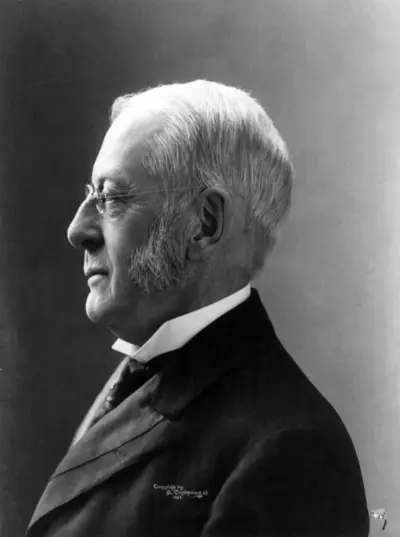
Charles William Eliot was an American academic who was selected as Harvard's president in 1869. A member of the prominent Eliot family of Boston, he transformed the provincial college into the pre-eminent American research university. Eliot served until 1909, having the longest term as president in the university's history.
