Mohammed Reza Pahlavi Quotes
The consequences of the Ayatollah's blood-thirsty fiasco could be disastrous for the whole of Islam and particularly for Shiism. The systematic destruction, in the name of religion, of a state and a society which vigilantly safeguarded the peace, could have effects in this part of the world which would be disastrous for sincere believers of the Koran, and even for those who believe less wholeheartedly. The murderous megalomania and the agitation of Qom, combined with the miserable dictatorship of a handful of mullahs, are, I insist, all in direct contradiction with the essential principles of Islam.
Qom is a city in Iran that is the center of Shiite Islam and inhabited by many Islamic clerics.,
Mohammed Reza Pahlavi, 1919-1980, Shah of Iran, The Shah's Story, 1980
Sourced by: Eigen's Political and Historical Quotations

There is of course no way to tell the sect of a Muslim by physique alone, although there are major behavioral differences. The reason the quotation was newsworthy was that it was amazing that a senior Senate leader was so ignorant of such a critical and problematical subset of the world.


Joint Chiefs of Staff Chairman Martin Dempsey recently described the Iranian leadership as “rational actors.” Lewis, the Western World’s greatest Islamic Historian, was advising regarding the Iranian effort to enrich uranium. The Iranians if they enriched enough could develop a nuclear weapon. Historically, nuclear powers have always been deterred by using them as the retaliation would wipe out most of their country and people. This Mutually Assured Destruction (MAD) Lewis felt might not inhibit the Iranian leadership who have glorified suicide bombers and have sent tens of thousands of young people to their deaths (and immediately to Paradise) leading Iranian troops through Iraqi minefields in the Iran Iraq War. The national security question was should Iran be allowed to get a nuclear weapon?

The writer was born and brought up a Muslim and because he criticizes Islam, he has had a death fatwa issued against him much like Salman Rushdie. His prediction was one of the earliest warnings

Most modern Islamic clerics were and are shocked at this interpretation of Islam,


El Baradei resigned when he made this statement. After the Arab Spring revolution, Mohammed Morsi had been elected President by a bare 51 pecent of the vote. However, he was a member of the political wing of the Muslim Brotherhood, an international terrorist organization which advocates Islamic Sharia and Theocracy. He began sizing powers and his government passed a constitution that did not guarantee basic human rights and moved towards a theocracy. Then he eliminated the checks and balances and the public finally revolted bringing 20 million Egyptians into the street in protest. A civil war was eminent and the military stepped in and forced Morsi to resign.


This quotation illustrates that the Muslim conquest and attempt to destroy and desecrate the symbols of other religions was not limited to Christianity—it was ALL other religions. In that sense, Christianity and Islam of the period were very similar at the time—intolerance to the point of murder and destruction of any “heathen” religion.
The irony of his lecturing the Russians was that the revolutionary regime he founded in Iran, which had faith in God, was terribly unpopular with the Iranian people precisely because of the lack of private ownership and freedom and a moribund economy. The ruling religious elite in the Iranian theocracy had to ban popular leaders from standing for election in order to maintain control of a country where most people preferred the very things that Khomeini and the other Ayatollahs advised were unimportant.

After years of minority Sunni Muslim rule of Iraq, the U. S. invasion gave the majority Shiite Muslims political control. The Sunnis and Shiites have been at each others throats for centuries despite the fact that they are both Muslims. Saudi Arabia is the center of Sunni Islam and many of its religious extremists issue edicts advocating the suicide bombing of Shiite mosques and other facilities and assuring martyrdom for the suicide bombers.
This was part of the continual conflict between the Muslims and the Eastern Orthodox Christians. The Greeks ended up doubling their territory.

Historically, this quotation shows that the negative relationship between the West and Islam and negative views of Islam was not a new phenomenon at the beginning of the 21st century. It existed long before, and as with the 21st century concerns, violence and war were the major concerns.

The Barbary Pirates of Algiers, led and controlled by the Bey or Dey (king) had an incredible extortion racket going in the Mediterranean. If nations would pay them an annual sum each year, they would not attack and seize merchant ships of that country and sell the ships and goods while holding the sailors for ransom. The only thing that the Algerians seemed to be interested in was money and religion.


A publicity seeking fundamentalist Christian minister in Florida had publicly burned a Koran to the moral condemnation of the President and most other government leaders, as well as clergy of all faiths. However, after the President of Afghanistan condemned the act, there were attacks on a United Nations compound in that country and a number of innocent people were killed and two beheaded. Yet most Muslim clerics were reluctant to morally condemn the murders while they were vociferous in castigating the Koran burning. Some were intimidated and feared that they would be attacked if they criticized the Islamic fundamentalism that advocated the murders and terrorism.

Historically, this is an amazing quotation. It is typical of analyses of Islam in the 21st century when America and most of the non-Muslim world was having great difficulties with Islamic militancy. But this was written at the end of the 19th century, in 1899. Churchill had a grasp of much that it would take other politicians a century to understand. This book was relatively unknown to all but a few historians, military men, and political scholars. (There was a shortened version published in 1902 which did not include this passage and that is the version that Project Gutenberg posted on the Internet. So do not assume that the quotation is wrong if you cannot find it in the version you are reading on the Internet. You need the 1899 longer and more detailed version.
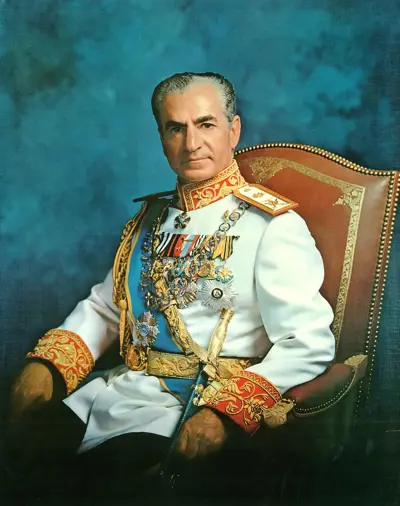
Mohammad Reza Pahlavi, also known as Mohammad Reza Shah (محمدرضا شاه), was the last Shah (King) of Iran from 16 September 1941 until his overthrow in the Iranian Revolution on 11 February 1979. Due to his status as the last Shah of Iran, he is often known as simply the Shah.
