Claudio Hummes Quotes
The Church doesn't censor. It tries to guide its faithful through catechism.
Hummes, Claudio. Quoted in "Cardinal Hummes on Church and Censorship." Catholic News Agency, 18 May 2006.


In 1780 the Massachusetts legislature passed a constitution, the 2nd article of which required all men to publicly worship: See {606670} Pen name: Jack Nipps

Carroll was writing to Troy during the time of the question of Catholic emancipation in England. Here he is clearly alluding to the British form of government. Carroll never missed the opportunity to champion religious freedom as manifested in the U.S. Constitution. For an earlier example of his praise for religious freedom, see {596933}.

In addition to being a Roman Catholic priest, Father Coughlin was an outspoken radio commentator who was well known for his controversial political opinions, see {598783}, {598784}.
While the Visigoths had some very advanced legal principles, this law, quoted in its entirety is typical of the nations that were part of the Catholic world. The church and its doctrines were immune from any possible criticism, explicit or implicit. This is the most formalized and sophisticated compendium of laws of the so-called “barbaric peoples” of Europe. The compilation was in many ways a documentation of the traditional laws of the Visigoths that had evolved over hundreds of years.

This was a fairly radical constraint on what had been a traditional priestly prerogative throughout the ages. However, the penalty for such a sin and infraction was rather modest—a warning for the first offence, followed by reducing the cleric’s income. There were more serious punishments proscribed for repeated offenses, but typical of most reform efforts a newly prohibited activity carries a very light penalty. For example $20 fines for providing alcohol to a minor was the initial penalty in some states. A then current comparison can be made since elsewhere in this council dueling between Christians was also prohibited. But the penalty for even the first offence was excommunication.


Curtis had at first arrested Samuel B. McPheeters a St. Louis preacher for pro-Southern sermons. Lincoln had countermanded the arrest order. Curtis released the pastor, but prohibited him from preaching in his own church. It took Lincoln many months to find this out and Lincoln then instructed this second instruction to Curtis not to continue the ban.

Odo of Chatillon-Sur-Marne. Note that the “Divine Right” of monarchy has become a “Devine Command.” Also, that a king was educated (See {591629}) was totally unusual for the times.


when the encyclical Casti Connubii was promulgated This was written before he was elected Pope. At the time there was some movement within the Catholic Church towards the possible liberalization of the traditional prohibition against birth control of any kind. At the time Montini was in the minority on the Commission, and after he assumed the Papacy, he became a majority of one.


This notice of Excommunication was promulgated to the Catholic clergy in Ireland in May of 1538. It required all Roman Catholic leaders to size the property of Protestants or Catholics who sympathized with them. Those who did were then regarded as traitors by the Protestant King. The anti-Protestant feeling culminated with the massacre of about 100 Protestants who were drowned in Bann a few years later.
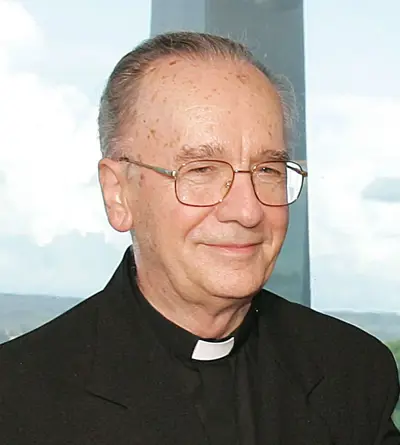
Cláudio Hummes, OFM is a Brazilian Cardinal of the Roman Catholic Church. He was prefect of the Congregation for the Clergy from 2006 to 2010, having served as Archbishop of Fortaleza from 1996 to 1998 and Archbishop of São Paulo from 1998 to 2006. A member of the Order of Friars Minor and an outspoken proponent of social justice, he was made a cardinal in 2001.
