Kim Jong Il Quotes
The Armistice Agreement has, in effect, become a blank piece of paper without any effect or significance.
See Charles de Gaulle {138034} on the ephemeral nature of treaties.
Kim Jong-il, 1941-2011, General Secretary of the Workers' Party and Ruler of North Korea, Referring to the Agreement that ended fighting in the Korean War in 1953, BBC News, February 18, 2003
Sourced by: Eigen's Political and Historical Quotations

See linked quotes for a North Korean example.


Santa Ana was, at the time, a captive of Sam Houston.

The Korean War armistice left a vulnerable border between North and South Korea and approximately 40,000 American troops were necessary for decades thereafter to protect the border.


After the Second World War Japanese industry had mostly not yet been rebuilt from the destruction of the allied bombing. The automobile industry, which before the war had aspirations of worldwide competition had been reduced to one company making less than 1000 cars a year and not many more trucks. However, when the Korean War broke out, there was a need for many military vehicles to support the allied war effort. Japan being so close and having very low labor rates had the opportunity to supply many of the needed vehicles. This allowed Nissan, Toyota and Datsun to get on their industrial feet, and from there to become world leaders. Hence, for Japan, the war was a gift from the Gods.

1st Earl of Beaconsfield. Contrast this statement with that of Neville Chamberlain returning from Munich in 1941. Disraeli had threatened war and forced the Russians to accept all the British demands by diplomatically isolating them first and moving armed troops into position just before the peace conference.

When Confederate General Simon Bolivar Buckner suggested a negotiated surrender of Fort Donaldson, which protected Nashville, TN, his West Point classmate and friend wired back:

Ironically, the Japanese Government and military were so polarized that it took several days for the authorities to get together and agree on a course of surrender action. The second atomic bomb dropped on Nagasaki speeded things up.

Chivington led troops to attack hostile Indians. When they arrived at Sand Creek, the most militant young Indian men had left. The others did not want to fight, displayed white flags and wanted to negotiate. Chivington made his famous statement, attacked the Indians and massacred most of them including the ones who were trying to surrender with white flags. See {597566}.

This clause has come into play throughout the Middle Eastern Conflict. So sooner would a cease fire and an agreement struck, but one of the dissident Arab groups bombed Israel thereby legally allowing the Israelis to demand the Palestinians punish the perpetrators and when they did not repudiate the reminder of the treaty.


General Grant had the fort surrounded and the confederate general hoped to surrender the fort and allow him and his men to leave to fight again some other day. This was often agreed to so the military objective would be gained without the casualties of a battle. However, Grant and Lincoln did not simply want to gain forts and territory. They wanted to end the war. Those Confederates who survived the battle were taken prisoner and were out of the fight.

This is one of the fears of many Israelis—that a Palestinian state with a peace treaty—will just be an opportunity for the Arabs to gain strength and develop their capability to again try and destroy the Jewish state which they have tried to do ever few years until they are defeated and another truce is negotiated.

This intelligence analysis turned out to predict exactly what happened. Less than 3 years after this report, the Communists overran South Korea and the Korean War began. See {584008} for another remarkable foreign policy prediction.
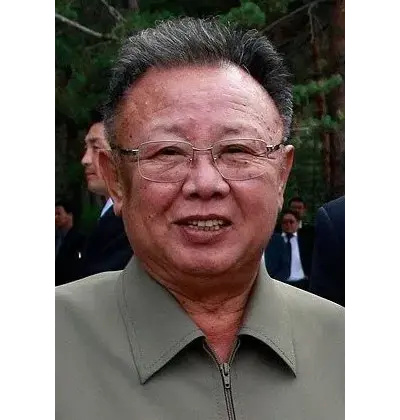
- Born: February 16, 1941
- Died: December 17, 2011
- Nationality: North Korean
- Profession: Leader
Kim Jong-il was a North Korean politician who served as the second Supreme Leader of North Korea from 1994 to 2011. He led North Korea from the 1994 death of his father – Kim Il-sung, the first Supreme Leader – until his own death in 2011, when he was succeeded by his son, Kim Jong-un.
