Noah Feldman Quotes
In 1953, after the armistice ending the Korean War, South Korea lay in ruins. President Eisenhower was eager to put an end to hostilities that had left his predecessor deeply unpopular, and the war ended in an uneasy stalemate.
Feldman, Noah. Cool War: The Future of Global Competition. Random House, 2013.


After the Second World War Japanese industry had mostly not yet been rebuilt from the destruction of the allied bombing. The automobile industry, which before the war had aspirations of worldwide competition had been reduced to one company making less than 1000 cars a year and not many more trucks. However, when the Korean War broke out, there was a need for many military vehicles to support the allied war effort. Japan being so close and having very low labor rates had the opportunity to supply many of the needed vehicles. This allowed Nissan, Toyota and Datsun to get on their industrial feet, and from there to become world leaders. Hence, for Japan, the war was a gift from the Gods.


The Korean War armistice left a vulnerable border between North and South Korea and approximately 40,000 American troops were necessary for decades thereafter to protect the border.


Compare this to Bernard Baruch's quotation about a cold war the year before.

He was the spokesperson for Secretary of Defense Donald Rumsfeld and the Administration’s Iraq War effort. It has never been ascertained whether the George W. Bush Administration was deliberately lying about the Iraq invasion or whether they were terribly naïve and not very competent.

Haig was one of those who thought that President George W. Bush should have continued the war and occupied the country and the cities to eliminate Saddam. His own son, George W. Bush, later invaded Iraq and did occupy the country and eliminate Saddam, but the cost was so high that few Americans thought it was worth the cost in American casualties and money. The younger Bush proved how wise his father and Colin Powell had been. See {622764}.

See Charles de Gaulle {138034} on the ephemeral nature of treaties.

Later, when he ran for the Democratic Presidential Nomination had had changed his mind and was a major opponent of the Vietnam War. This was the pattern of so many Americans whose first instinct was to support the government’s decision to wage war, and over time grew disenchanted with the war and ended up opposing the war actively.


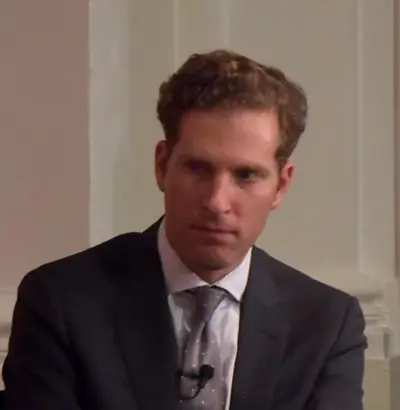
Noah R. Feldman is an American academic, author, columnist, public intellectual, and host of the podcast Deep Background. He is the Felix Frankfurter Professor of Law at Harvard Law School and chairman of the Society of Fellows at Harvard University. His work is devoted to constitutional law, with an emphasis on free speech, law & religion, and the history of constitutional ideas.
