Clare Boothe Luce Quotes
The American is exactly five times better in combat than the Japanese.
During World War II, she was a correspondent covering the Flying Tigers in Burma. Her basis for this propaganda statement was the ratio of Japanese to American plane losses in aerial combat in that particular theater of the war.
Clare Boothe Luce, 1903-1987, U.S. Congresswoman (Republican, CT), U. S. Ambassador to Italy & Brazil, Article in Time Magazine
Sourced by: Eigen's Political and Historical Quotations

Umezu was one of several members of the Japanese War Council, that did not want to surrender even after the second atomic bomb destroyed Nagasaki. He and the other hard liners were convinced that the Japanese could inflict such heavy casualties on an invading force of the mainland that the Allies would not insist on unconditional surrender and Japan could negotiate favorable terms. These hard liners had already lived through the firebombing of Tokyo which in casualties was as bad as the atom bomb attacks, and felt that they could maintain a defensive force even if all the major cities of Japan were destroyed. Fortunately for all parties, the Emperor overruled Umezu and the hardliners. Umezu and the other hard liners had personal reasons to want to negotiate terms. They had committed war crimes and did not want to be brought to account. He was tried after the surrender and sentenced to life in prison where he died of cancer after 4 years.

Shortly thereafter, Ma Hongkui, and his soldiers ran for their lives and barely escaped to Taiwan as the Communists took over all of the Chinese mainland.


During the presidential debates George W. Bush stated that he would be very hesitant to use the military for nation building around the world. Less than a year later, the Bush administration, faced with the September 11, 2001 terrorist attacks, launched a massive attack on the Taliban regime in Afghanistan. After fighting and winning the war, the military soon realized that they would in fact be involved in nation building. However, with the assistance of the United Nations much of the humanitarian burden was lifted from the U.S. military.


Referring to the Joint Committee for the Conduct of the War—the unit of Congress that scrutinized and often tried to micro-mange Abraham Lincoln's efforts:

Although jihad was a duty of Muslims, it was not a duty to die in a fight against overwhelming odds which was determined to be 2 to 1. So 2 Muslims could run from 4 but not 3.

At Potsdam the Allies had called for the unconditional surrender of the Japanese and reiterated what had been allied policy that the surrender must be unconditional. Even after the Hiroshima bombing, the Japanese military cabinet voted not to surrender. After the second atomic bomb, the Emperor decided to surrender, but even then there was an attempted military coup to prevent that. Fortunately, the coup failed. We did not have any more atomic bombs immediately ready and it would have taken months to construct more.
Japanese military culture of the time was that a soldier who surrendered, even if wounded, was totally dishonorable and therefore could be abused and killed. The American marines then retaliated, and after that, the Americans also took no live prisoners contrary to American military regulations. This incident shows how difficult it is to maintain military professional standards and regulations if the other side does not. Similar situations existed in most American wars, but by the end of the 20th century, the all volunteer military had become much more professionalized and disciplined, and there were relatively few American atrocities despite many provocations.


Before American entry into the War with Japan, Chiang Kai-shek and the Soongs maintained that they were fighting the Japanese but it was not generally true. They were fighting Mao and his Communists while Mao was fighting the Japanese. By 1942, under pressure from the United States and Russia, the Nationalists and Communists agreed to a truce so that they could both fight against Japan. Based on the promises made to President Roosevelt by Madam Chiang, the Soongs, and Chiang himself, there was an expectation of extensive military attacks against the Japanese. The U. S. then sent a large amount of military aid to Chiang Kai-shek, but there did not appear to be any significant attacks against the Japanese other than those mounted by the Communists. Magruder, General Marshall’s emissary to Chiang Kai-shek was instructed to investigate. When the war ended, Chiang Kai-shek used the assets he was saving in to attack Mao and his communists just as he had done before the truce. Magruder had been right. However, just as Chiang could not defeat the militarily inferior Communists before the truce, he could not do so after. Soon Mao turned the tables and drove Chiang Kai-shek and his Nationalists out of Mainland China. President Roosevelt had brilliantly judged the ability of England, Russia, and Yugoslavia to fight the Germans, but as this quotation and {641677} shows, he listened to the wrong people. He had been sold a “bill of goods” by the China Lobby, the Soongs and Chiang Kai-shek.

See Napoleon Bonaparte for a similar view.


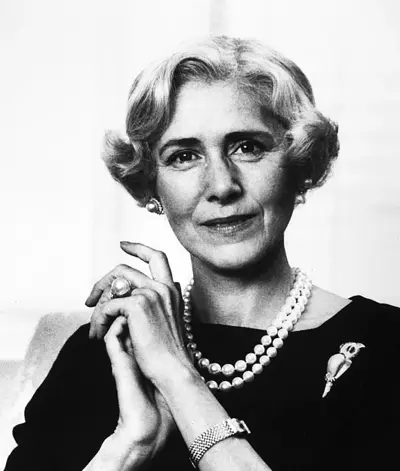
Ann Clare Boothe Luce was an American author, politician, U.S. Ambassador and public conservative figure. A versatile author, she is best known for her 1936 hit play The Women, which had an all-female cast. Her writings extended from drama and screen scenarios to fiction, journalism and war reportage. She was the wife of Henry Luce, publisher of Time, Life, Fortune, and Sports Illustrated.
