Mao Zedong Quotes
Armament is an important factor in war but not the decisive factor .... Man, not material, forms the decisive factor.
See Napoleon Bonaparte for a similar view.
Mao Tse-Tung, 1893-1976, Chairman, Communist Party of China, Chinese Revolutionary Leader & Political Philosopher, Founder, The People's Republic of China, Speech, 1938
Sourced by: Eigen's Political and Historical Quotations


There is a , romantic American myth about the Militiamen in Colonial and Revolutionary America—the citizen soldiers who would leave their farms and rise to the military necessity of the day. However, not only were the militia very hard to muster to duty, but most actually didn’t own or have experience with firearms, and the prevailing opinion of knowledgeable military leaders from George Washington on down was that the militia were not very good soldiers. See {613015}, {613016}, {613022}, {613027}, {621987}, {621988}, {613030}, {613033}, & {613056}


Much of the Chinese military had been distracted from military readiness in favor of political, economic, and ceremonial, activity along with extensive economic corruption. The People’s Liberation Army is a major political force in China which made this a very noteworthy chastisement. Leading Generals were with him however. See {632518}.


He had wanted more troops for the Afghan War than President Obama would approve. The Republican members of the Congress tried to make the difference a major issue of a President not supporting his commanders. The General made this brilliant response.


1st Baron Verulam. The word “estate’ meant a political unit or subunit. These might be ruled by kings, dukes, war lords, etc. However, Bacon’s point was all armaments and the physical trappings of war are relatively minor when compared to the qualities of the population. With modern technology, this principle has become less and less true. Given the same technology in war, the outcome will depend on the human qualities and warlike disposition of the humans. However, a modern force with modern equipment and weapons can defeat an enemy of braver and more warlike disposition which does not have the same technology. In the modern world, a number of cultures find this a very distressing reality. The noble and courageous man should win, but Western technology, many complain, is undermining the old, traditional virtues.


Saddam claimed to his people that Iraq had essentially won the Gulf War as they were stronger afterwards than ever before and they had been able to suppress the Kurds and the Shiites with the helicopters and arms with which the emerged from the war and had been allowed to keep.


His hubris soon backfired as the Indians learned how to tactically cope with firearms. For example they soon learned that they would see the flash of the musket before the ball would discharge, so would lie down and the bullets would pass overhead. The muskets were effective as defensive weapons from behind barricades though not very accurate. Swords and pikes turned out to be more effective in most cases.

Clark had commanded the American and NATO forces in the Serbian War where all the military and political objectives were accomplished with heavy losses to the Serbian’s and none to the allied side—what many think was the most successful war in American History. Like Eisenhower in WWII one great challenge was the political and strategic one of keeping the coalition of all the allied governments working together. His perspective had been like Eisenhower and other officers in history was much wider and geopolitical than most military officers.
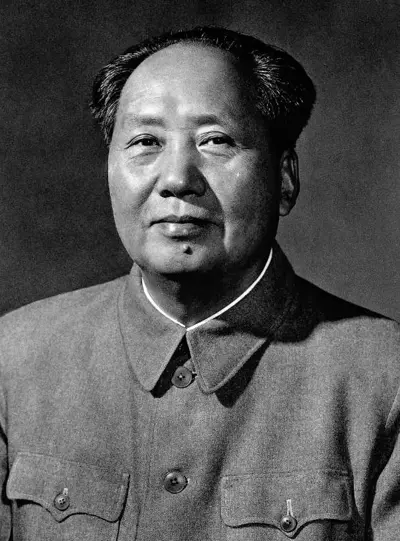
Mao Zedong, also known as Chairman Mao, was a Chinese communist revolutionary who was the founder of the People's Republic of China (PRC), which he ruled as the chairman of the Chinese Communist Party from its establishment in 1949 until his death in 1976. Ideologically a Marxist–Leninist, his theories, military strategies, and political policies are collectively known as Maoism.
