Sojourner Truth Quotes
That man over there says that women need to be helped into carriages, and lifted over ditches, and to have the best place everywhere. Nobody ever helps me into carriages, or over mud puddles, or gives me any best place, and ain't I a woman? ... I have plowed, and planted, and gathered into barns, and no man could head me -- and ain't I a woman? I could work as much and eat as much as a man (when I could get it), and bear the lash as well -- and ain't I a woman? I have borne thirteen children and seen most all sold off to slavery and when I cried out with my mother's grief, none but Jesus heard me -- and ain't I woman?
Sojourner Truth, ~1797–1883, [Isabella Baumfree], Orator, Preacher,Feminist, Abolitionist and Women's Rights Activist, Speech, Ohio Woman's Rights Convention, Akron, Ohio, 1854
Sourced by: Eigen's Political and Historical Quotations


She was opposed to women accepting so called chivalrous behavior by men. Many women were reluctant to give up the few advantages that they did have.

The President often referred to this statement as an example of his wife’s acumen. She had been born to a Southern plantation and inherited the land and the slaves. Her view, and his, were typical of the Southern point of view in early America.


The party was not yet ready for women voting. Hardie resigned as Party Leader. In 1910 he agreed to return as Party Leader and the party was then not in opposition to women’s suffrage although many members were still against women voting.


1st Earl of Mansfield


She is vehemently opposed to allowing women to serve in the armed forces.


The issue of slavery which had been suppressed in Congress for the first decades of the nation broke out when Missouri statehood was considered. By previous agreement, slavery was not even discussed in Congress but the time period elapsed. Tallmadge not only proposed that no more slaves could come into Missouri {613176} but most shocking to the Southerners was that every person born in the new state would be free at the age of 25. In a generation, there would be no more slavery in Missouri and there would be no economic compensation for slave owners at all. The House of Representatives accepted the amendment, but it failed in the Senate. At that time, Senators were not elected by voters but were appointed by the state legislators and the Southern slave states had a disproportionate share of the senate from a population point of view. But what this quotation shows clearly that a majority of the country in 1819 were opposed to slavery and were willing to end it without compensation.


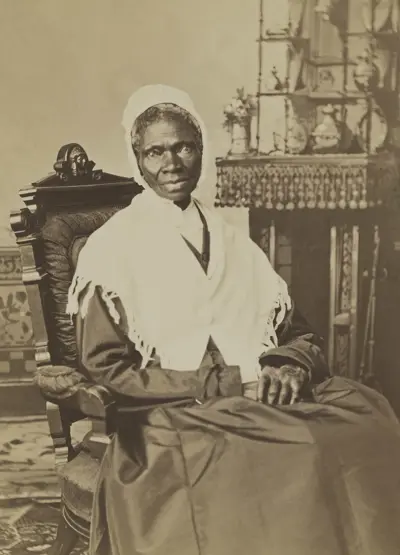
Sojourner Truth was an American abolitionist and women's rights activist. Truth was born into slavery in Swartekill, New York, but escaped with her infant daughter to freedom in 1826. After going to court to recover her son in 1828, she became the first black woman to win such a case against a white man.
