Sarah Moore Grimke Quotes
I am persuaded that the rights of woman, like the rights of slaves, need only be examined to be understood and asserted.
Sarah Moore Grimke, 1792-1873, Abolitionist & Feminist, Letter, July 1837
Sourced by: Eigen's Political and Historical Quotations


The following year, women got the right to vote, the first nation to reach that level of enlightenment.


She was in China as a delegate to the international congress and not in an official capacity as a representative and First Lady of the United States. Nonetheless, such implied criticism of the Chinese leadership in their own capital.


Note, that like other feminist leaders of the time, she viewed the fetus as a person. However, between the economic pressures and the illegality of birth control devices and information provision, abortion was a critical decision that had to be faced by many women. Later, feminist leadership had to come to grips with the issue of who makes the decision in these areas, and placed the right of the woman to make these decisions, as opposed to husbands, fathers and government, as the highest priority. Then, when the drivers for abortion could not be eliminated, it was women who were criminalized. Feminists then fought for the right of abortion and the right of the woman to make decisions, but feminine leadership has never—in America—been advocates of abortion as opposed to the right of abortion, a subtlety that often is lost.


Billinghurst was physically handicapped without the use of her legs. She protested and marched in protest parades using a hand propelled tricycle which the police sometimes dumped her out of and left her immobile in alleys.


At the time and for the next decade she was one of the few world leaders who made women’s equality and rights a major priority. But slowly American and European women and many men began to give higher priority to using foreign policy and foreign aid. Then women from Asia and Africa began to take up the issue and in the early 21st century even some women in the Islamic nations began to fight for women’s rights. Mrs. Roosevelt. However, was the first modern major and high visibility politician to make women’s rights a major international and national issue.


Stewart a Black, female journalist wrote at a pre Civil War time when most people were little interested in the writings of either Blacks or women.


At the time most of the terrorists of the world were Muslim fundamentalists whose “values” they were supposedly fighting for included the suppression and repression of women.
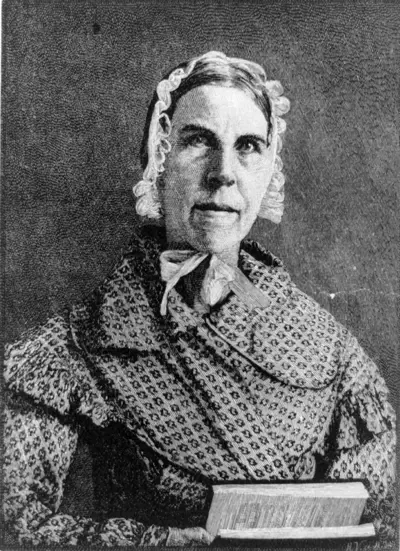
Sarah Moore Grimké was an American abolitionist, widely held to be the mother of the women's suffrage movement.:xxi Born and reared in South Carolina to a prominent, wealthy planter family, she moved to Philadelphia, Pennsylvania, in the 1820s and became a Quaker, as did her younger sister Angelina. The sisters began to speak on the abolitionist lecture circuit, joining a tradition of women who had been speaking in public on political issues since colonial days, including Susanna Wright, Hannah Griffitts, Susan B. Anthony, Elizabeth Cady Stanton, and Anna Dickinson. They recounted their knowledge of slavery firsthand, urged abolition, and also became activists for women's rights.
